

School Was Fine. Then They Fell Apart in the Car.
The first week back is harder than the first day. What sits behind the one word answers and the after school crash.
Read More
parentingback to school
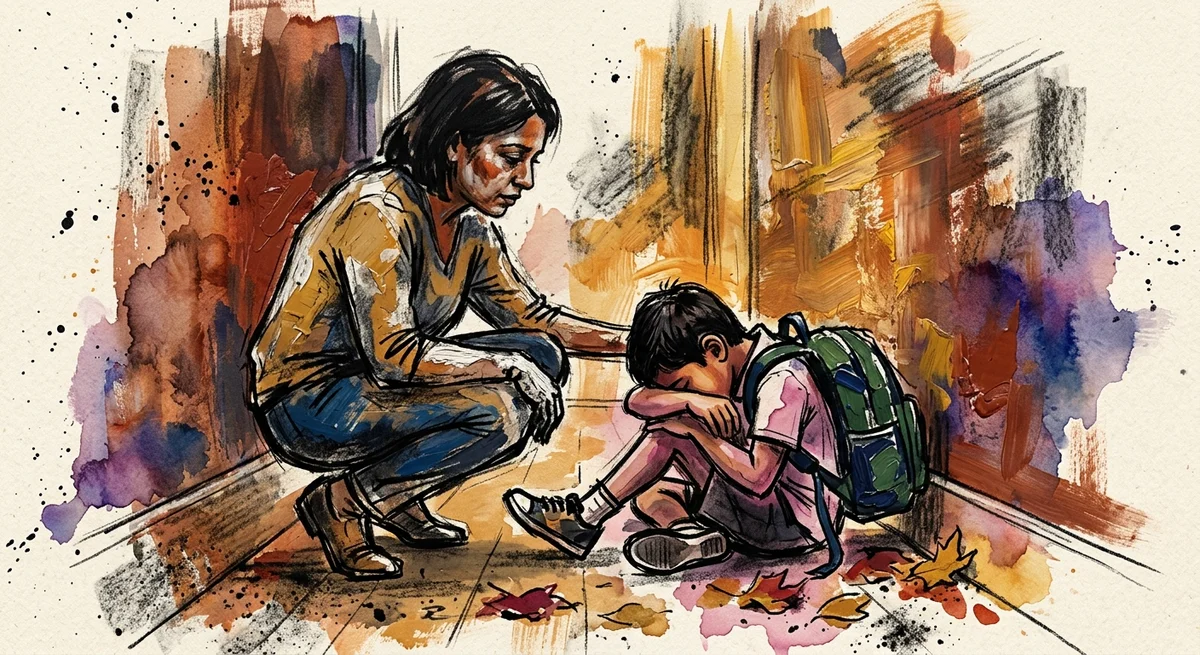
Late September is when the emotional regulation cracks start showing at home. Why the meltdowns get worse six weeks in, not on day one, and how to co-regulate instead of correcting.
It is the end of September and a missing sock just ended your evening. Six weeks ago this same child walked into a new classroom, met a new teacher and got on with it. Now there are tears over nothing four nights out of five, and you have started quietly wondering whether something bigger is going on.
Holding yourself together is work. A school day asks a child to sit still, wait their turn, read a room, ignore the kid kicking their chair, and not cry when they get an answer wrong in front of everyone. All of that comes out of the same tank, and school empties most of it before three o'clock.
For the first fortnight, adrenaline covers the gap. New teacher, new shoes, everyone watching. By week six the novelty has gone, the workload is real, it is dark by dinner and there is no long weekend in sight. What is left for home is not much.
So the meltdown lands on you, over a sock, at six in the evening. Not because home is the problem. Because home is the only place safe enough to come apart in. Which is a genuinely annoying compliment to receive when you are two hours into an evening that has gone sideways.
One more thing helps to know. When a child is in that state, correction does not reach them. You can be entirely right about the tone they used and it will still not land, because the part of them that can weigh a fair point has temporarily shut down. Saying it again, louder, is what most of us reach for and it is the least likely thing to work.
Co-regulation means your calm is the thing they borrow. You are not letting the behaviour go. You are lending them a steadier nervous system until their own comes back, and the conversation happens after that.
It also helps to notice how much of what comes out of your mouth in that window is correction about forgotten things. Reading folder, PE kit, permission slip, water bottle. KinClub shared to-dos and reminders were built to take some of that off you, so the nudge arrives as a notification instead of one more thing you have to say out loud to a child who is already running on empty.
A few short watches on big feelings, meltdowns and staying the steady one.
Week six is the hardest stretch of the term and it does pass. Tonight, when it goes wrong, try sitting down next to them and saying nothing for two minutes. The conversation you were going to have will still be there tomorrow, and they will actually be able to hear it.
The first week back is harder than the first day. What sits behind the one word answers and the after school crash.
The biggest block of time you get with your kids all week goes invisible once the routine settles. How to use it on purpose.
The difference between natural and logical consequences, and how to use both without falling back on punishment.