

Parental Modeling
How your habits shape the behavior of children around you and what you can do about it.
Read More
parenting
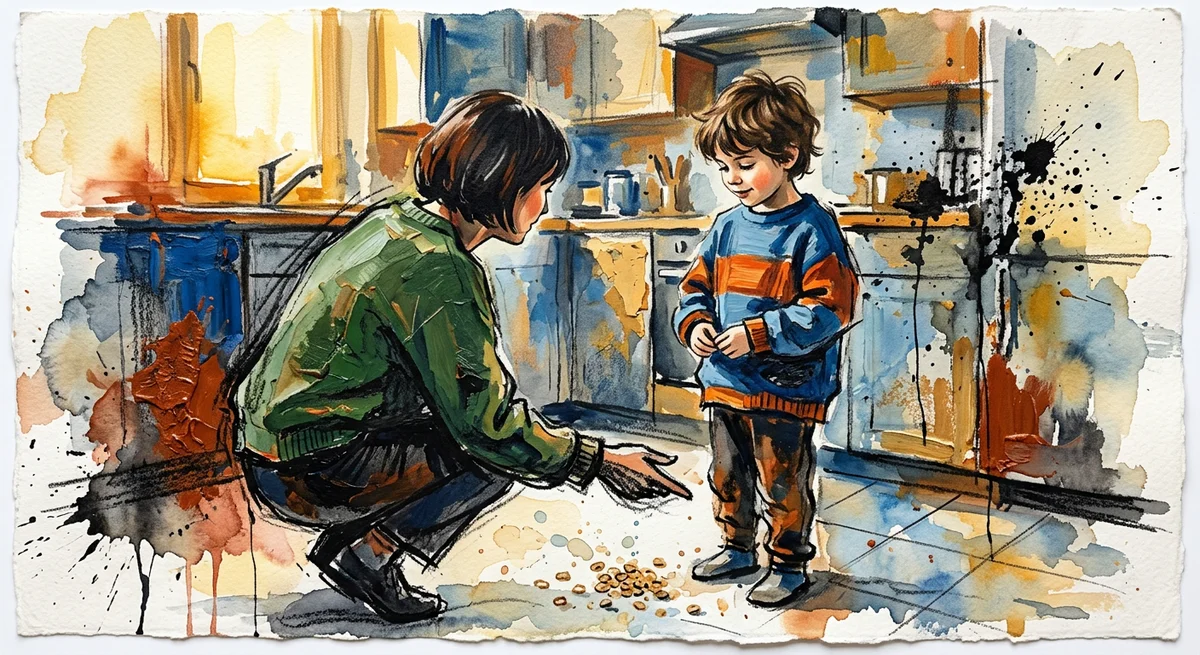
Learn the difference between natural and logical consequences, why they work better than punishment, and how to use both approaches to raise resilient, self-aware kids.
Picture this: your seven-year-old has left their bike outside in the rain for the third time. You reminded them twice this week. Now the chain is rusty, and they are upset.
You have two choices. You can respond with a punishment — no screen time for a week, a long lecture about responsibility, a sharp "I told you so." Or you can let the moment do the teaching instead.
This second path is the heart of positive discipline — and specifically, of two of its most powerful tools: natural consequences and logical consequences. Neither requires raising your voice. Neither involves shame. And both, when used thoughtfully, are far more effective at building lasting responsibility than most traditional punishments.
This post breaks down what each type of consequence is, when to use them, how to tell the difference, and — critically — how to avoid the traps that turn well-meaning consequences into punishment in disguise.
Before diving in, it is worth clearing up a common misconception: positive discipline is not the same as permissive parenting. It does not mean letting children do whatever they want without consequence. It means the consequences are connected to learning rather than to making a child feel bad.
The approach grew from the work of psychologists Alfred Adler and Rudolf Dreikurs, and was later developed into a practical framework by Dr Jane Nelsen. The core premise is that children misbehave not out of malice but because of unmet needs or undeveloped skills — and that our job as parents is to teach, not simply to punish.
Where did we ever get the crazy idea that in order to make children do better, first we have to make them feel worse?
A natural consequence is simply what happens when no adult intervenes. It is the direct, organic result of a choice.
Natural consequences are powerful precisely because they are not coming from you. There is no battle of wills, no authority to resent or rebel against. The world is simply responding to the choice that was made.
How to use them well
The most important thing parents can do when a natural consequence plays out is to show empathy without piling on. Resist the urge to say "I told you so" — it turns a learning moment into a shame spiral and shifts the focus from the consequence to your child's resentment of you.
Instead, try: "Oh no, your toy got soaked. That is really disappointing. What do you think you might do differently next time?"
When natural consequences are not appropriate
Natural consequences have clear limits. Do not use them when:
In these situations, logical consequences step in.
A logical consequence is one an adult creates — but that is directly connected to the behaviour in question. The key word is connected. If it has no relationship to the behaviour, it is not a logical consequence. It is just a punishment with a different label.
The Positive Discipline framework describes effective logical consequences through four principles:
Examples in practice:
| Behaviour | Logical Consequence |
|---|---|
| Draws on the wall | Helps clean it up |
| Rides bike without a helmet | Loses bike privileges for a day |
| Breaks a sibling's toy through carelessness | Saves allowance to replace it |
| Leaves dishes on the sofa | Loses sofa privileges for TV time |
| Wastes time before dinner and is late to the table | Eats a smaller reheated portion |
Notice how each consequence is directly connected to the behaviour. A child who draws on the wall and then spends time scrubbing it off understands the connection instantly — no lengthy lecture required.
This is where many well-intentioned parents get stuck. It is easy to dress up a punishment as a logical consequence when the two actually feel quite different to a child.
Here is the test: Is the goal to teach, or to make the child suffer?
A punishment is designed to make a child feel bad enough to avoid the behaviour in future. A consequence is designed to help them understand the connection between their choice and its outcome — and to develop the skills to choose differently next time.
Punishments can work in the short term, but research consistently shows they teach children to avoid getting caught, not to avoid the behaviour. Logical consequences, by contrast, build genuine self-regulation over time — the kind that lasts when you are not in the room.
The language you use matters. Here are some phrases that deliver consequences while keeping the relationship intact:
Notice what all of these have in common: they are calm, connected, and forward-facing. No lectures. No "you always do this." Just a direct, clear link between choice and outcome.
Natural and logical consequences are not about being a softer parent. They are about being a more effective one. When the consequence is genuinely connected to the behaviour, children learn faster, feel less resentment, and gradually build the internal compass that guides them even when no adult is watching.
You will not get it right every time. In a frustrated moment, a sharp lecture might still slip out. What matters is the overall pattern — a consistent, patient effort to connect choices to outcomes, delivered with calm and care rather than anger and shame.
Make family expectations clear and consistent with KinClub — so the rules are shared, the consequences feel fair, and everyone knows what to expect.
How your habits shape the behavior of children around you and what you can do about it.

How to transform your kids from reluctant helpers to enthusiastic contributors using motivation and simple systems.

How to raise children who compete with grace, handle setbacks with resilience, and celebrate others without gloating.