

Parental Modeling
How your habits shape the behavior of children around you — and what you can do about it.
Read More
parenting
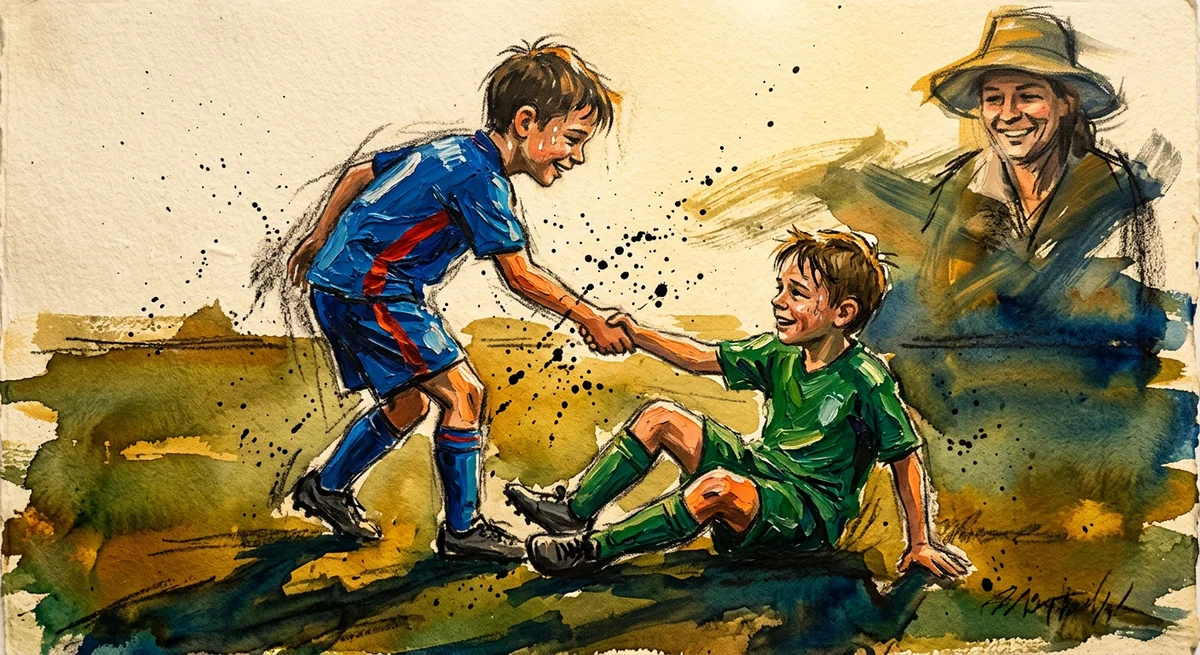
From the Olympic podium to the backyard board game, here is how to raise children who compete with grace, handle setbacks with resilience, and celebrate others without gloating.
The Paris 2024 Olympics gave the world plenty of highlight-reel moments. But the clips that spread farthest weren't always the gold medal performances. They were the images after the final whistle: the handshake across the net, the tears of a silver medallist comforted by the winner, the athlete who jogged back to help a fallen competitor. In those moments, the Olympics reminded us of something important — how you compete matters as much as whether you win.
For parents, those scenes are more than inspiration. They are a preview of conversations we need to be having with our kids long before any trophy is at stake.
Whether it is a weekend soccer match, a family board game, or a spelling bee at school, competition is woven through childhood. And in the heat of it, two characters often emerge at opposite ends: the sore loser (who melts down when the result goes the wrong way) and the sore winner (who cannot resist rubbing victory in everyone's face). Most children will play both roles at some point. The question is: how do we guide them toward something better?
This post is your practical guide to raising a good sport — a child who can celebrate without gloating, absorb a loss without falling apart, and keep their focus on what really matters: effort, growth, and the joy of showing up.
Before we label a child "a bad loser," it helps to understand what is happening beneath the surface. When kids lose, the emotional response can be intense — tears, stomping, "I quit," or declaring the game was unfair. This is not simply bad behaviour. It is a normal stage of development.
Children aged 5 to 10 are still building emotional regulation skills. Their sense of identity is also fragile and closely tied to performance. Losing can feel like a statement about who they are, not just what happened in the game. A child who shouts "this is stupid!" after losing at Uno is not being dramatic for effect — they are genuinely overwhelmed.
What this means for parents: the meltdown after a loss is not a character flaw. It is an opportunity. A child who cares deeply enough to be upset is a child with drive and investment. Your job is to help them channel that energy productively.
Sore winners get far less attention than sore losers — but gloating, taunting, or excessive celebration at someone else's expense is just as damaging to relationships and character.
Often, children who win poorly are not being cruel. They are overexcited, or they have not yet learned that the other person has real feelings too. Some children who gloat have actually experienced a lot of losing themselves, and the relief of finally winning comes out in an overwhelming rush.
Addressing it requires care and good timing. A quiet aside in the moment is far more effective than public shaming — calling a child out in front of others usually backfires. Later, in a calm and private moment, you can open the conversation:
"How do you think Jamie felt when you did a victory dance in front of them?"
Most children, once they slow down and genuinely consider it, have real empathy. They just need the prompt.
The Olympics modelled this beautifully, but we can break it down into concrete, teachable behaviours:
These are not abstract values. They are learnable habits — and like all habits, they get built through repetition, practice, and a lot of patient modelling by the adults around them.
Before the game: set the expectation
Before a competition, have a brief, positive conversation about what good sportsmanship looks like. Not a lecture — just a check-in: "Whatever happens today, what is one way you can show the other team respect?" This primes the mindset before emotions run high, and it shifts focus from the outcome to the behaviour.
During: watch what you say from the sideline
This is arguably the most important point in this entire post. Research consistently shows that children absorb the attitudes of their parents at sporting events more than almost any other influence. If you are rolling your eyes at a referee, criticising the other team, or groaning loudly at your child's mistakes, you are teaching something — just not what you intend.
The Olympic athletes who earned the world's admiration for their grace? They learned it somewhere. Often from a coach, a parent, or a mentor who modelled it when it mattered.
After the game: the debrief that actually helps
Give your child a few minutes to decompress before any debrief — especially after a tough loss. Then focus on two things: feelings and effort, not outcome.
Notice what is absent: "Did you win?" This does not mean results do not matter. It means they are not the only thing that matters — and the way you frame your questions teaches your child exactly where to put their focus.
Practice at home, at low stakes
One of the most effective tools for building sportsmanship is the regular family game night. Board games, card games, video games — all of it counts. Model graceful losing yourself: "Oh well, you got me that time — well played!" Children learn what they see far more than what they are told.
There is an important distinction between healthy and unhealthy competition. Unhealthy competition is focused entirely on outcome — winning is everything, and losing is a catastrophe. Healthy competition focuses on growth — the challenge itself is the point, and improvement is the real reward.
Good sportsmanship builds character and teaches children respect, grace under pressure, and how to deal with adversity — skills that serve them in every area of life.
You can nurture a healthy competitive mindset by:
When kids understand that competition is fundamentally about growth — not dominance — they compete better. And they lose better too.
The Paris Games offered a particular image that stayed with many parents: multiple athletes from rival nations consoling each other after devastating results, celebrating each other's achievements even in their own disappointment. That is not weakness. That is character at the highest level.
We can bring that spirit into our everyday family life — not through pressure to perform, but through patient, consistent teaching. The brief pre-game conversation. The calm example from the sideline. The gentle debrief over snacks when the final whistle blows.
Your child is going to be a sore loser sometimes. And probably a sore winner too. That is completely normal — and it is exactly why they need you alongside them. Not to demand perfection, but to model something better, one game at a time.
Start celebrating how your family plays, not just whether you win — join KinClub and make great sportsmanship a family tradition.
How your habits shape the behavior of children around you — and what you can do about it.

Warm, practical strategies to help children aged 6 to 12 manage social anxiety and build confidence at school.
Practical tips and activities to help parents nurture thankfulness in children, especially during the holiday season.