

Parental Modeling in the Digital Age
How your habits shape theirs.
Read More
parenting
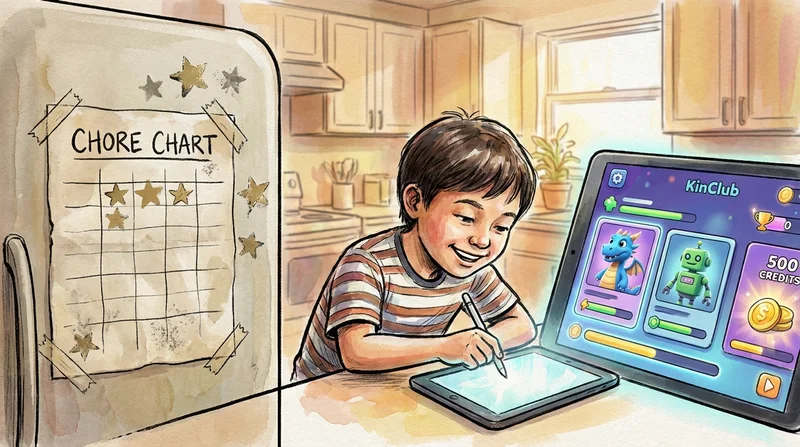
Explore the science of intrinsic vs. extrinsic motivation and discover how to transform your kids from "helpers" to "contributors" using gamified systems.
It’s the universal parental soundtrack: the heavy sigh, the "Why do I have to do it?", and the inevitable negotiation over how many minutes of Minecraft a clean bedroom is worth. We’ve all been there. In the quest for a tidy house and responsible humans, most parents turn to the trusty chore chart.
But as your fridge fills up with gold stars, a deeper question emerges: Are we teaching our kids the value of hard work, or are we just training them to be tiny mercenaries who won’t lift a finger without a bribe? This week, we’re diving into the "Chore Chart Debate"—the tug-of-war between intrinsic and extrinsic motivation—and how to build a system that actually lasts.
Understanding why kids do (or don't) do what they're asked is the first step toward a peaceful Saturday morning.
This is when a child contributes because it feels good to be organized, they take pride in a job well done, or they simply want to support the family.
This involves rewards like stickers, allowance, or extra screen time.
Language matters. When we ask kids to "help" us, we imply that the work is ultimately our responsibility and they are doing us a favor. When we view them as contributors, we shift the ownership.
"A contributor feels essential to the family’s functioning. This boosts self-worth more than any sticker ever could."
To make this shift, consider these strategies:
If you’ve tried chore charts before and they’ve ended up as dusty relics on the fridge, you might be missing these three pillars:
We know that finding the balance between "doing it for the family" and "doing it for a reward" is tough. That’s why we’ve built a bridge.
Introducing the KinClub Gamified Chore System. Parents can now assign specific chores with custom cadences (daily, weekly, or one-offs) and allocate Credits or Points for completion. By tying chores to the KinClub ecosystem, you aren't just giving them "play money"—you're giving them the currency to engage in trading cards, digital artwork, and AI Buddy interactions within a safe, family-only environment.
Different families need different flows. Whether you prefer a "Job Jar" or a "Daily Rhythm," these proven methods help bridge the gap between "nagging" and "done."
Testing
Whether you use a paper chart, a Montessori-style "job jar," or the new KinClub gamified system, the goal remains the same: raising humans who see a need and fill it. By balancing the fun of rewards with the pride of contribution, you’re not just getting a clean kitchen—you’re building a foundation of responsibility that will last long after the last gold sticker has fallen off the fridge.
Ready to turn the "Chore War" into a "Chore Score"? Log in to your KinClub parent dashboard today to set up your first gamified task! Would you like me to draft a list of age-appropriate chores for your first chart? Or perhaps you'd like to see a tutorial on how to allocate credits?