

School Was Fine. Then They Fell Apart in the Car.
The first week back is harder than the first day. What is behind the one-word answers and the after-school crash, and why connection beats a perfect routine.
Read More
parentingback to school

The school routine finally settled, and the biggest block of time you get with your kids all week just went invisible. Here is how to spot the after-school window and start using it on purpose.
Sometime in the past two weeks, the school year clicked into place. The bus turns up when it should, lunches get packed without a standoff, and everyone knows where their shoes are. A routine that finally runs itself is a relief. It is also invisible, and the first stretch to disappear into it is the one between the last bell and dinner.
Count the waking hours you actually get with your child on a school day. The morning is a scramble with a deadline. The evening is dinner, dishes, and the slow march to bed. What is left is the block between pickup and dinner, and it is bigger than everything else put together. Across a week, those afternoons come to twelve or fifteen hours, which is more than most families get out of a whole weekend.
Once the routine settles, that block fills itself in. Snack happens, homework happens, somebody gets driven to practice, and a screen goes on while you answer email and start dinner. Nobody chose any of it. It just filled in, the way water finds the low spots.
The reason those hours are worth noticing is that they are when kids actually talk. Not at six, when you ask how school was and get one word back. At 3:45, mouth full of crackers, apropos of nothing. The story about who cried at recess comes out sideways, in low-stakes minutes when nobody is fishing for it. Miss those minutes often enough and you start to believe your child tells you nothing, when really they were telling you at a time you were not listening.
Intentional does not mean scheduled. Nobody needs a color-coded afternoon, and your child does not need another enrichment block. The idea is smaller: decide on purpose what one or two pieces of the afternoon are for, and let the rest stay ordinary.
And if your afternoons are split across two houses, or a grandparent covers homework by phone, KinClub recently added a shared blackboard to video calls, so the person helping can work the math problem alongside your child instead of describing it down the line.
A few short watches if you want to go deeper on afternoon routines and low-key connection.
You do not need a new routine. The one you built is working, which is exactly why now is the moment to look at it. This week, just watch what your afternoons hold, then pick one small piece and claim it on purpose. If you want help keeping the anchor you choose, that daily kind of connection is what KinClub was built for.
The first week back is harder than the first day. What is behind the one-word answers and the after-school crash, and why connection beats a perfect routine.

Homework is already a nightly fight two weeks in. How to trade nagging and monitoring for working alongside your child.
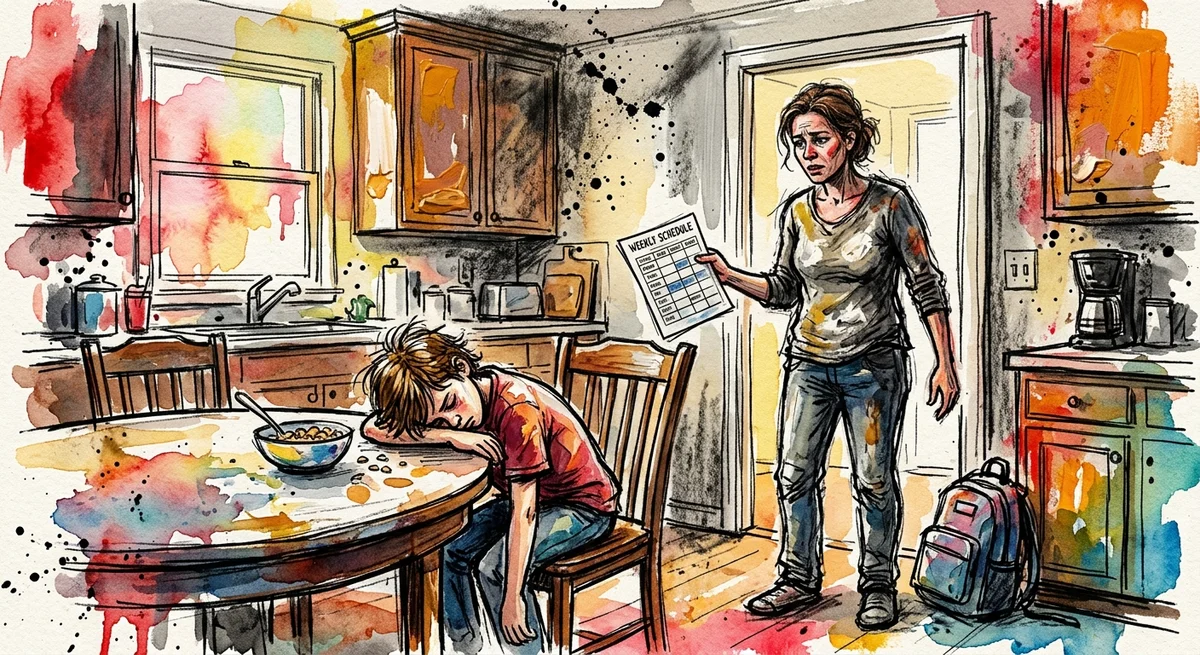
Why kids push back on routines they used to accept, and how to rebuild with connection anchors instead of enforcement.