

Homework Without the Battles: Motivation and Routine Tips That Actually Work
Warm, practical strategies for building homework routines that stick and motivation that comes from within.
Read More
homeworkroutines

Two weeks into the school year and homework is already a nightly fight. The pattern you set now is the one that sticks, so here is how to trade nagging and monitoring for working alongside your child.
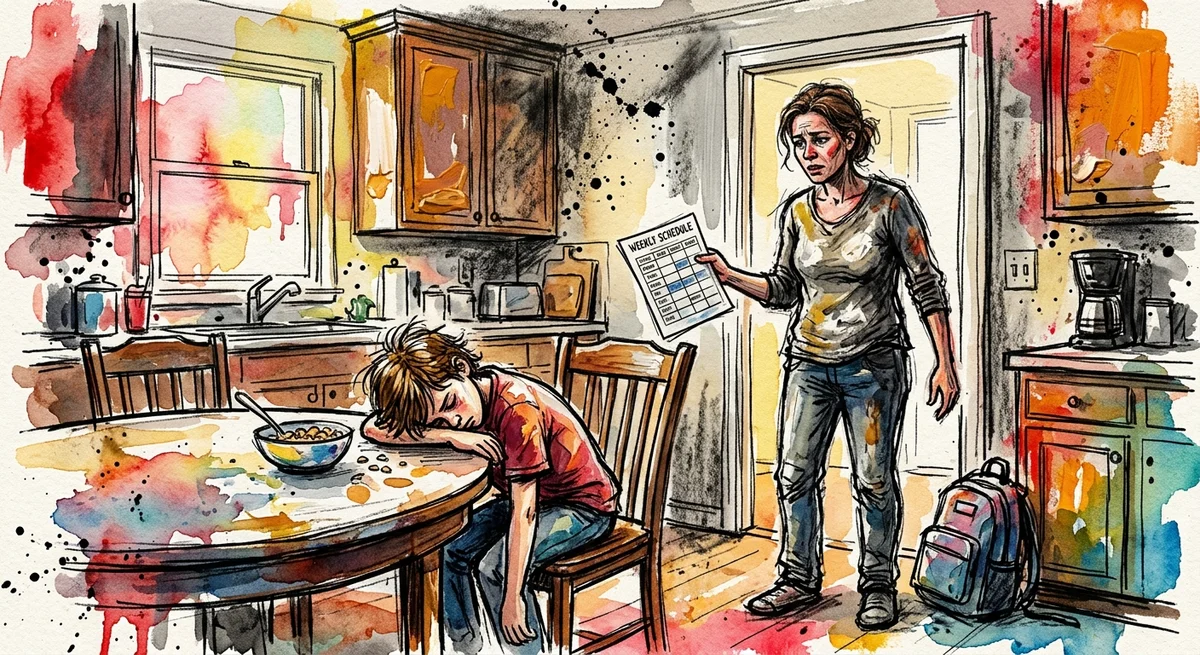
Two weeks into the school year and 4pm already has a mood. The backpack hits the floor, you ask about homework, and the argument starts before the folder is even open. Here is what nobody mentions in August: the homework pattern your family falls into during these first weeks is usually the one you are still living with in February. Right now it is still soft. That is the opportunity.
When homework turns into a standoff, most of us respond by tightening our grip. More reminders, more checking in from the doorway. It feels responsible. It also guarantees the same fight tomorrow.
Policing moves homework out of your child's column and into yours. Every reminder says, quietly, this is mine to manage, not yours. Kids hear that message clearly, and they respond the way most people respond to being managed: they slow down, dig in, or wait you out. The assignment stops being about fractions and turns into a contest over who is in charge, and a worksheet cannot survive that.
The frustration you feel at 6pm makes sense. You worked all day, dinner is not made, and a ten-minute reading log has somehow eaten an hour. That frustration is worth listening to, though. If homework is wearing you out, the current setup has you carrying something that was never yours to carry.
The alternative is not walking away. It is changing seats. Instead of supervising from above, you work alongside, and your child can tell the difference from across the room.
Fair warning: the first week of this feels worse. Some homework will land late or not at all while your child figures out that the work actually belongs to them. Late August is the cheapest time all year to let that happen. A missed reading log in week three costs almost nothing. The same standoff in April costs plenty. And if the pile of syllabus pages and permission slips is part of the chaos, KinClub's Family Records will file a photo of each one with a title and a date, which clears the table for the actual work.
A few videos worth ten minutes this week, on ending homework fights and getting cooperation without the nagging.
The fight you are having this week is not really about homework. It is about who owns it. Hand it back now, while the year is young, and sit beside them while they carry it. And if you want help with the logistics, KinClub keeps the reminders, the lists, and the paperwork in one place so you can keep your seat at the table.
Warm, practical strategies for building homework routines that stick and motivation that comes from within.

The first week back is harder than the first day. What is behind the one word answers and the after school crash.
Why kids push back on routines they used to accept, and how to rebuild with connection anchors instead of enforcement.