
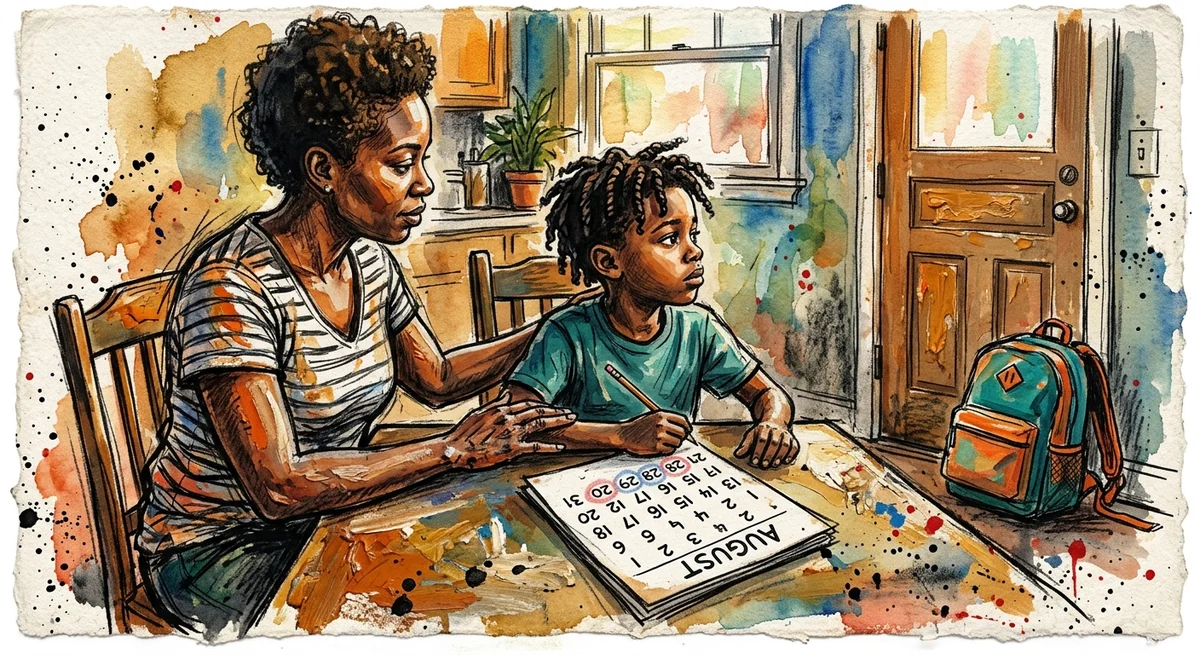
Summer Ending Anxiety Is Real: A Gentler Way Back to Routine
Why the last weeks of summer feel harder than the first, and how to ease back into structure gradually.
Read More
summerroutines
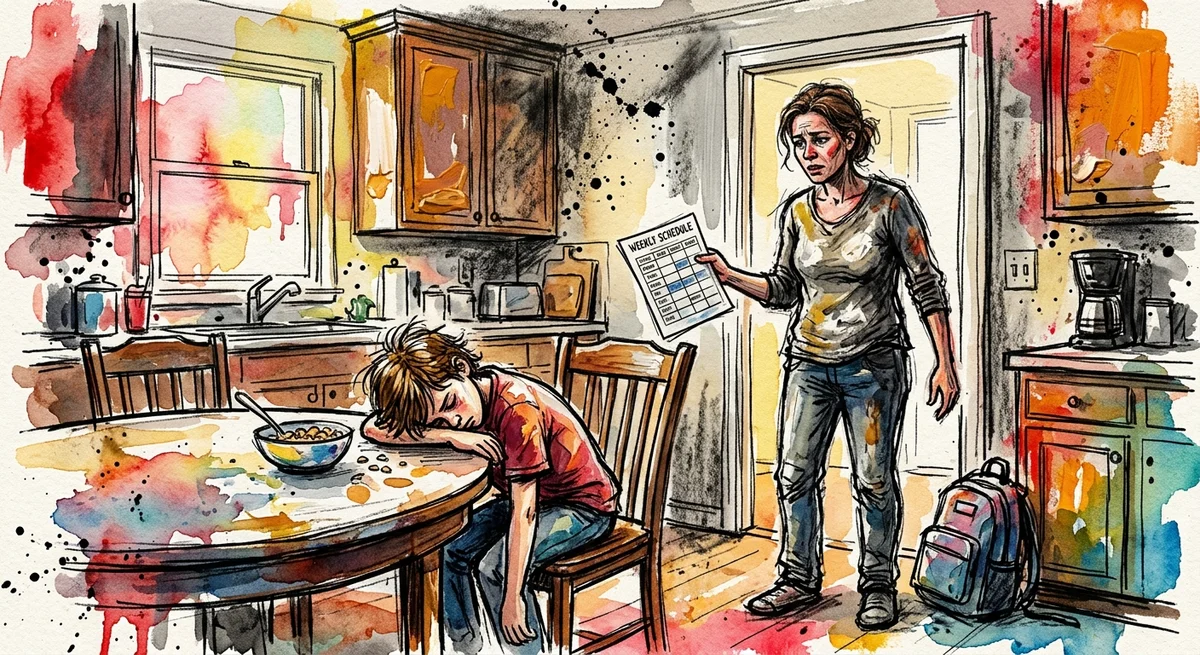
You put the chart back on the fridge and it turned into a standoff. Here is why kids push back on routines they used to accept, and how to rebuild before school starts using connection anchors instead of enforcement.
The chart is back on the fridge. Bedtime at 8:30, screens off at seven, shoes by the door. Three days in you are standing in a hallway arguing about a plan nobody could call unfair, and losing. If you are wondering how this got so hard when it worked fine in May, the answer is not that you went soft over the summer.
Your kid is not arguing about bedtime. They are arguing about who decides. Summer hands children more say over their own day than any other stretch of the year: when they eat, when they quit, what the afternoon is for. Eight weeks of that changes what normal feels like, so when the schedule comes back it does not feel organised to them. It feels like something being taken away.
Then there is the part nobody warns you about. Your child has aged a year since the last time you ran this routine. The nine-year-old at your kitchen table is not the eight-year-old you built the system for. They spot every inconsistency you let slide in July, and they have opinions about bedtime now that deserve a hearing, even when the answer does not change.
Their bodies are out of practice too. Waking a kid at 6:45 after two months of nine o'clock mornings is a physical ask, not an attitude problem. The body clock drifts later over a long break and takes a few weeks to drift back. What reads as defiance over cereal is often a kid whose system has not been asked to do this since June.
A child resisting an early wake-up after a long break is usually adjusting a body clock, not testing a boundary.
None of that is backsliding. It is what happens when someone gets handed a set of rules they had no part in writing, right at the point they had finally stopped missing them.
When a routine gets rejected, the instinct is to enforce it harder: a bigger chart, a tighter timer, a consequence bolted onto whatever they are fighting about. That usually backfires, because enforcement is more of the thing they were pushing against in the first place, which is being managed.
Picking a couple of connection anchors works better. An anchor is a fixed point in the day with something in it your child actually wants, so the structure arrives alongside the good part instead of being the whole conversation.
Bedtime shows it best. "Lights out at 8:30" is an order that invites a negotiation. "We read together at 8:15" gets you lights out at 8:30 without one.
Evenings need an anchor too, and it does not have to be quiet. A short family game after dinner gives the end of the day a shape without a single instruction attached to it. KinClub added Game leaderboards for exactly this kind of thing, keeping a friendly scoreboard inside your own family so a five-minute round becomes something the kids ask for.
Two anchors is plenty. One in the morning, one at night, and you add the next one the following week. There are about three weeks left before school starts, which is enough runway as long as you actually use it instead of reinstalling the whole school year on the Sunday before the first day.
Then hand over the decisions you genuinely do not care about. Which book. Which side of the table. Shoes by the door or shoes in the basket. Kids who get real say over the small things have much less to prove on the big ones.
The routine will come back. Whether it arrives as a rule or as something your child helped build is mostly down to how fast you push it. Pick one anchor this week and leave the rest of the list alone.
Why the last weeks of summer feel harder than the first, and how to ease back into structure gradually.

Practical strategies for building homework routines that stick once school starts.
Why consequences work better than punishment, and how to use both kinds well.