
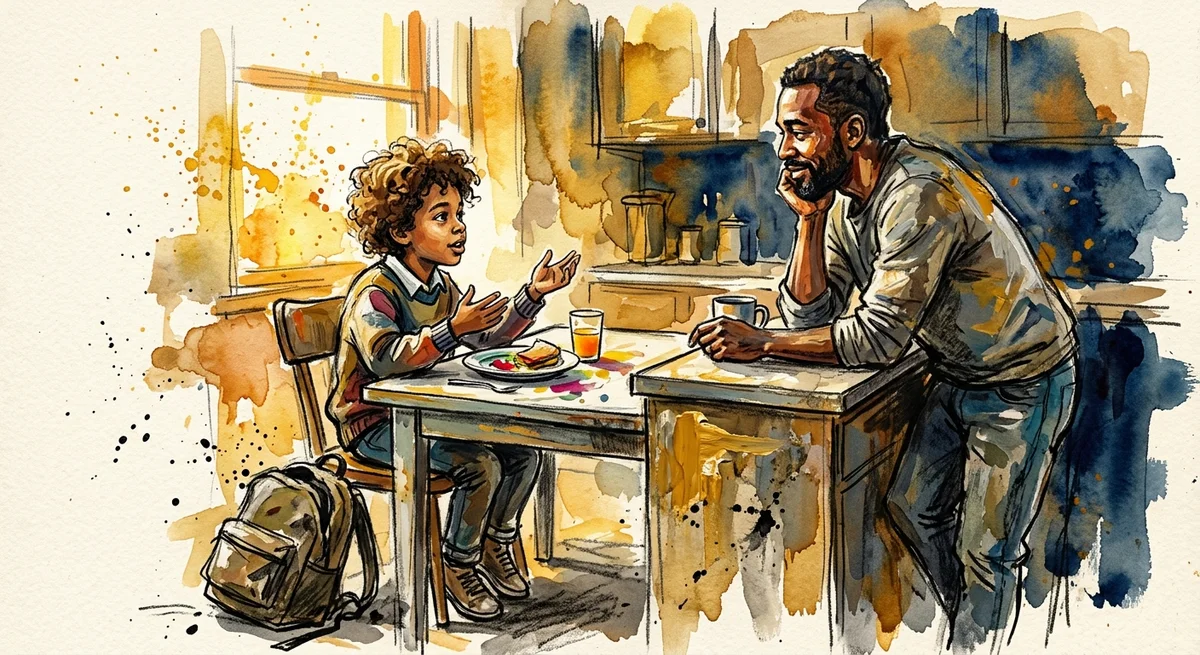
Your Best Parenting Hours Are Hiding Between School and Dinner
The biggest block of time you get with your kids all week just went invisible. Here is how to start using it on purpose.
Read More
after school
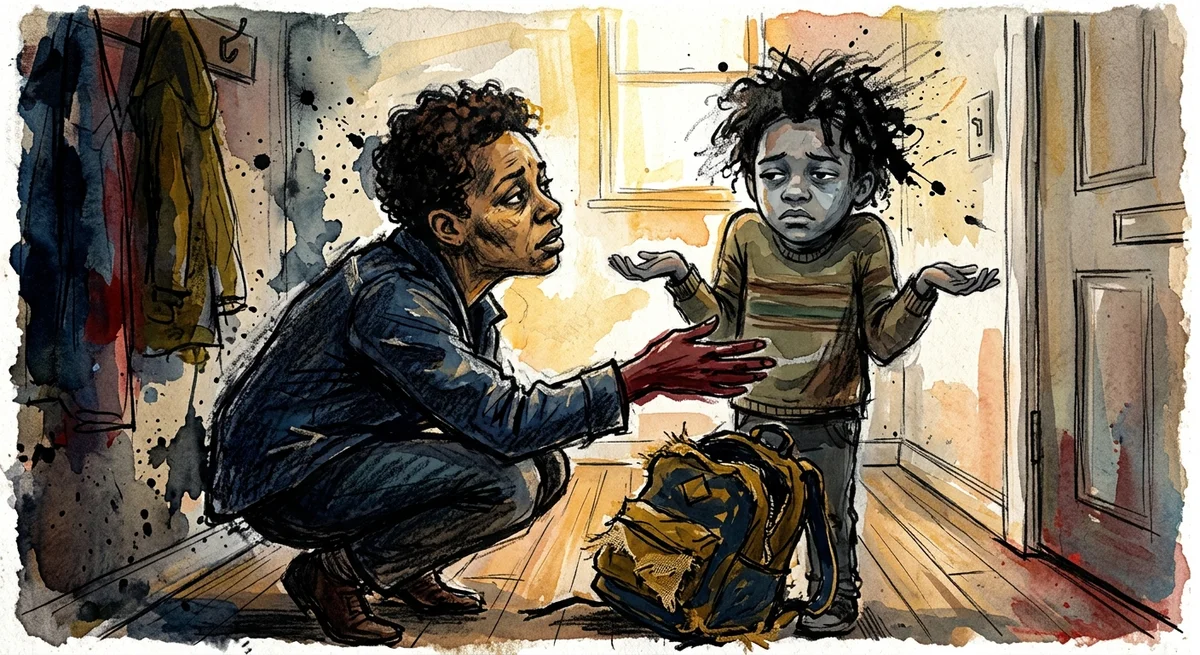
Mid-September is when the school year loses its newness and every answer shrinks to one word. Here is what boring is usually reporting, and how to swap the daily interrogation for something you actually do together.
Third week of September, and you have asked the same question every day since school went back. You get the same word every time. Boring. Then you either let it go or push a bit harder, and pushing has never worked once.
Boring is almost never a review of the lessons. For most kids between six and twelve it is the nearest available word for several different things, and the one it means least often is that school itself was dull.
Mid-September is when the shine comes off. The first fortnight had a new teacher, a new seat, a new tray, and everything was an event worth mentioning at the door. By week four the timetable is just the timetable, and nothing in the day stands out enough for a child to bother describing it.
Sometimes boring means I sat still for six hours and nobody asked me anything. Sometimes it means the work got harder this month and I am not going to admit that in the hallway. Sometimes it means I have been holding myself together since eight in the morning and there are no words left in me. And sometimes it just means I cannot squash a whole day into a sentence while you are standing there with a bag of shopping in each hand.
The word is maddening because it closes the door from both ends. You hear a complaint with no fix attached to it. They hear a question they have no answer for that would please you.
I asked my daughter what was boring about it and she looked at me like I had asked her to describe water. She was not being difficult. She genuinely did not know which bit I wanted.
A cleverer question is not the answer here. Twenty questions later you are still interviewing a nine-year-old at the end of their working day, and nobody has ever enjoyed being on either side of that.
What helps is changing the shape of the thing. Kids talk while something else is going on, when their hands are busy and they can look at the floor instead of your face. They also talk far more readily when there is something in front of them to react to, rather than an empty space they are expected to fill.
So put something between the two of you. A quiz where you both have to guess and you might be wrong. A story you read a page of each. A question with an answer they can argue with. Start with one dull thing from your own day and invite them to beat it.
The same is true of the learning itself. When a child calls a subject boring, they usually mean they were on the receiving end of it for an hour. Give them the same material in a form where they press, pick, guess, get it wrong and then find out why, and it stops being something happening to them.
For younger ones, the same trick works with the Story Reader library. Read a page each, stop and ask what they think happens next, and let them be wrong out loud.
The word is not going anywhere and you do not have to defeat it. Find something to do together in the twenty minutes after the door shuts, and the talking usually turns up by itself.
The biggest block of time you get with your kids all week just went invisible. Here is how to start using it on purpose.
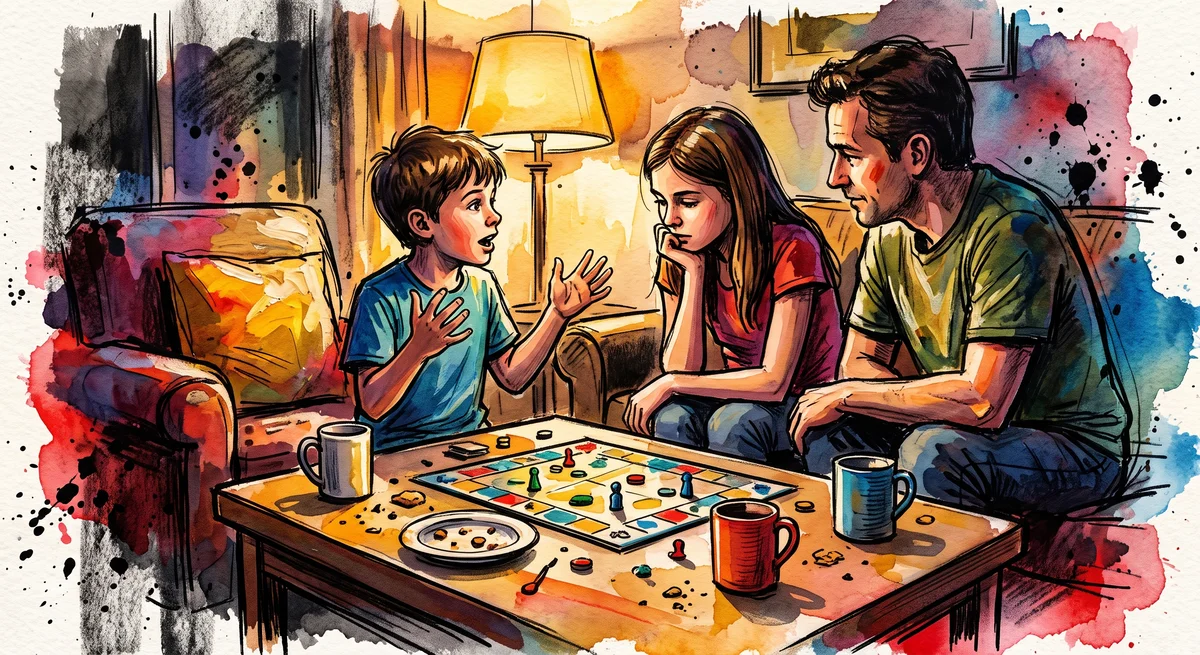
The play that gets kids talking is the play where nobody is trying to beat anybody. Here is how to make the swap this weekend.

Trade nagging and monitoring for working alongside your child before the nightly fight becomes the routine.