
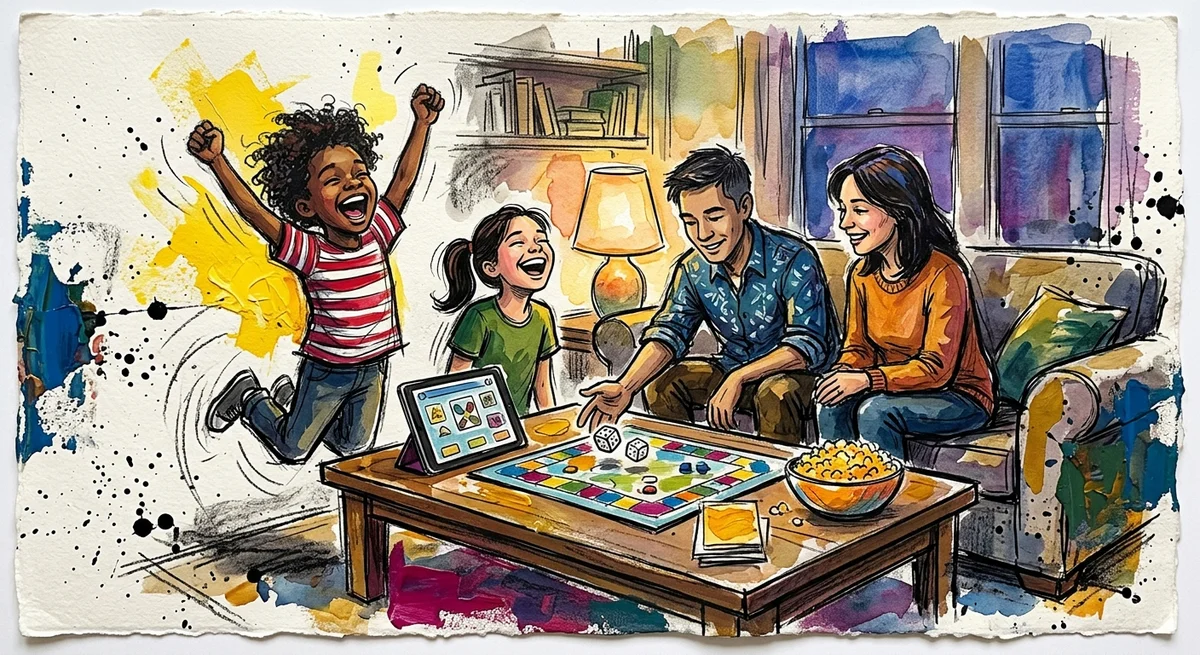
Dice on the Table, Controller on the Couch: The Hybrid Family Game Night
Board games are having a renaissance and your kids still love their screens. You do not have to choose.
Read More
game night
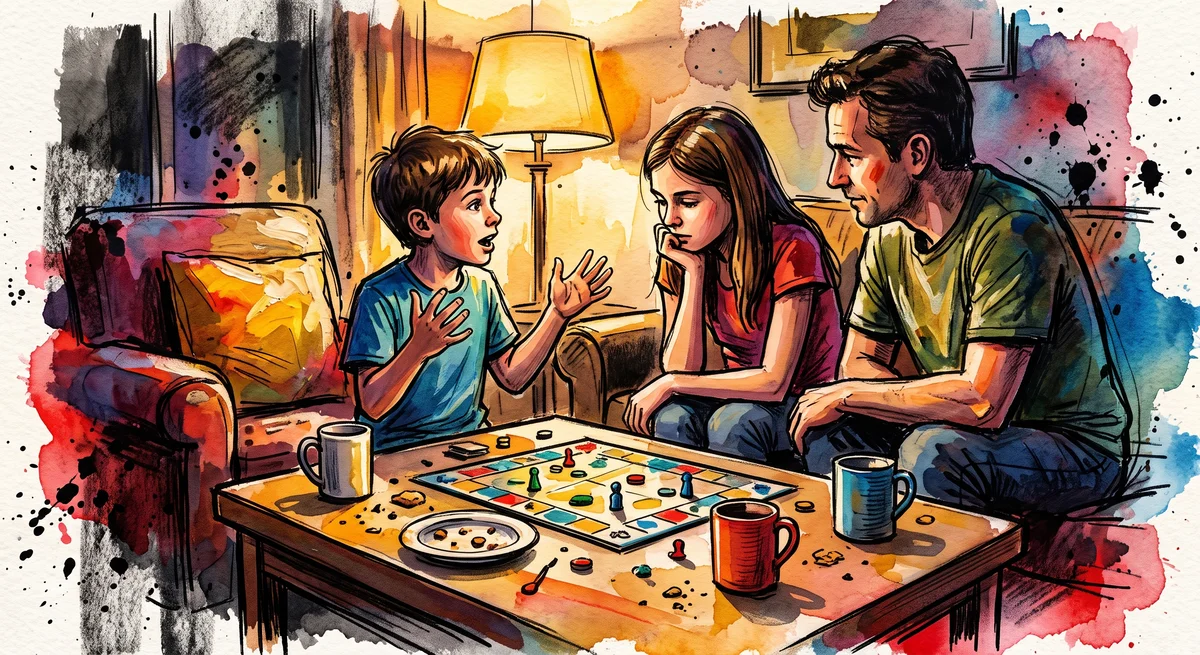
The ESA report this month backs up something parents keep noticing at their own kitchen tables: the play that gets kids talking is the play where nobody is trying to beat anybody. Here is how to make the swap this weekend.
My nine-year-old gives me four words about his school day. Four. Last Saturday he talked for forty minutes straight, because the family was two turns from losing a board game and he had worked out how to save it. He had not changed. The game had. Nobody at that table was playing against him.
There is a moment in most competitive games where a kid goes silent, and it usually lands right after they figure something out. If only one person can win, saying what you know out loud hands it to somebody else. So they sit on it. They watch. They answer you with a shrug, and the only voice left at the table is a parent asking whose turn it is.
Cooperative games work the other way round. Everyone is on the same side, the board is the opponent, and you cannot get through it without saying what you are holding, what you are worried about, and what you think the group should do next. The talking is not a nice side effect. It is how the game is played.
The Entertainment Software Association put out its report this month, and the finding that stuck with me matches what I hear from families all year: most people who play games play them with other people, and the sessions they describe as real social time are the ones where they are on the same team rather than trying to knock each other out.
I have lost count of the parents who have told me their child does not open up. The child opens up fine. They need a reason to talk that is not an interview.
The quietest kid at the table is often just the one with the most to lose by speaking. Change what speaking costs and you get a different child.
You do not need a shelf of new games or a family announcement. It comes down to which box comes off the shelf first, and how the table gets run once it is open.
The first couple of rounds can feel odd if your family is used to keeping score. Give it two game nights before you decide. Usually what happens is that the kid who normally sits back with their arms folded turns into the one narrating the plan.
If your family plays across two houses, this is where video calls have got genuinely useful. KinClub's activity dock lets you start a watch party, share a screen or open a game on a call and move between them without hanging up, so a cousin or a parent in another postcode can be on the same side of the board as everyone else.
You do not have to engineer a better conversation this weekend. Put something on the table that they cannot get through without each other, then get out of the way. The talking arrives on its own.
Board games are having a renaissance and your kids still love their screens. You do not have to choose.

Why new friendships count as a real milestone for kids 6 to 12, and how to support the skill without hovering.
How to spot the after-school window and start using it on purpose.