The Low-Demand Weekend: How to Help Your Child (and Yourself) Recover from a Week of Masking
If your neurodivergent child falls apart every Friday afternoon, they are not being difficult — they are exhausted. Here is what a low-demand weekend actually looks like, and why it is one of the most loving things you can offer.
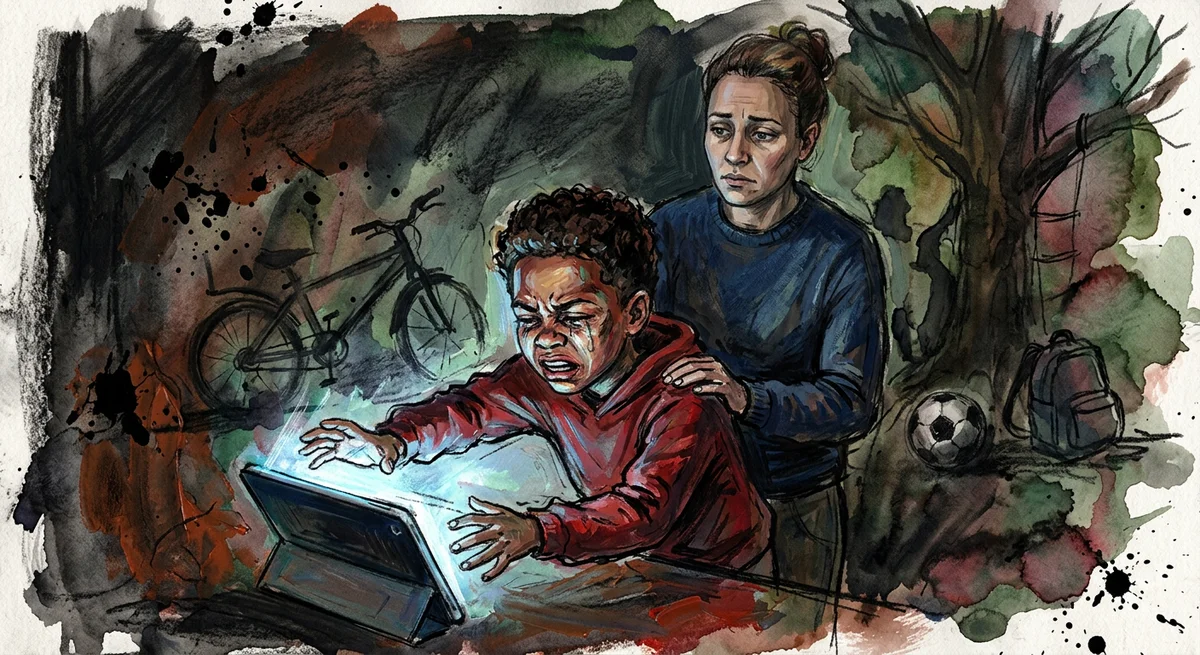
Friday afternoon arrives, and so does the crash. Your child — who held it together all week at school — walks through the door and dissolves. Maybe it is a meltdown. Maybe it is a shutdown: headphones on, blanket pulled up, total silence. Maybe it is something subtler: defiance, irritability, a sudden inability to make any decision at all.
If this pattern sounds familiar, there is a name for what your child has been doing all week. It is called masking, and by Friday, the tank is empty.
This post is about what happens next — and how a low-demand weekend can be the reset both of you need.
Masking — sometimes called camouflaging — is the effort neurodivergent children make to suppress or hide their natural traits in order to fit into neurotypical environments. For autistic children, this might mean forcing eye contact, suppressing stimming, carefully monitoring how loudly they are speaking, or scripting social interactions in real time. For children with ADHD, it might mean sitting still when every part of their body wants to move, or using enormous mental energy to track a lesson their brain keeps drifting away from. For children with a PDA (Pathological Demand Avoidance) profile, just navigating a day full of instructions and transitions is a profound neurological feat.
School, as it is currently designed, is a masking marathon.
Masking is not a choice neurodivergent people make. It is a survival adaptation — often learned very young, usually unconscious, always costly.
The cost shows up at home, where the mask finally comes off. This is sometimes called the afterschool restraint collapse — and it is not bad behaviour. It is your child trusting you enough to fall apart safely. That trust is a gift, even when it feels like a grenade.
Low-demand parenting is not zero-demand parenting. You are not abandoning structure. You are stripping away the unnecessary demands — the ones that exist out of habit, social convention, or vague anxiety about whether your child is "keeping up."
In practice, a low-demand weekend might look like:
No chore renegotiations on Saturday morning. Chores can wait, or be handled by you alone this weekend. The dish in the sink is not worth the cost.
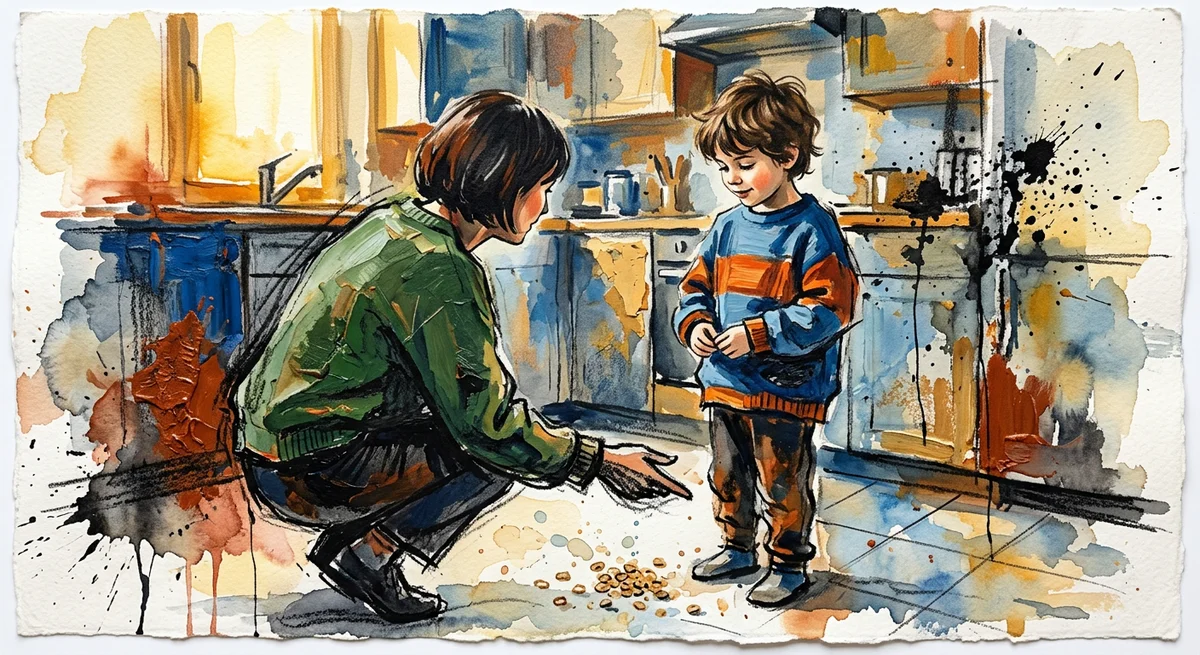
Food without a fight. Offer safe foods. If they want the same beige meal they ate on Tuesday, that is fine. This is not the weekend to introduce new textures.
Clothing by comfort, not occasion. Pyjamas until noon (or all day). Seams and waistbands are demands too.
No front-loaded plans. The birthday party, the family visit, the errand run — look at what can be moved, and move it. If it cannot be moved, build in recovery time before and after.
Choices, not directives. Instead of "we are going to the park," try "would you like to go outside, or stay in?" And honour the answer without disappointment.
The goal is to lower the neurological load long enough for your child's nervous system to come back to baseline. That takes longer than most parents expect — sometimes the whole weekend.
Here is where parents sometimes struggle: the way your child decompresses may look, from the outside, like doing nothing. Or like regression. Or like a complete waste of a perfectly good Saturday.
It is not. It is recovery.
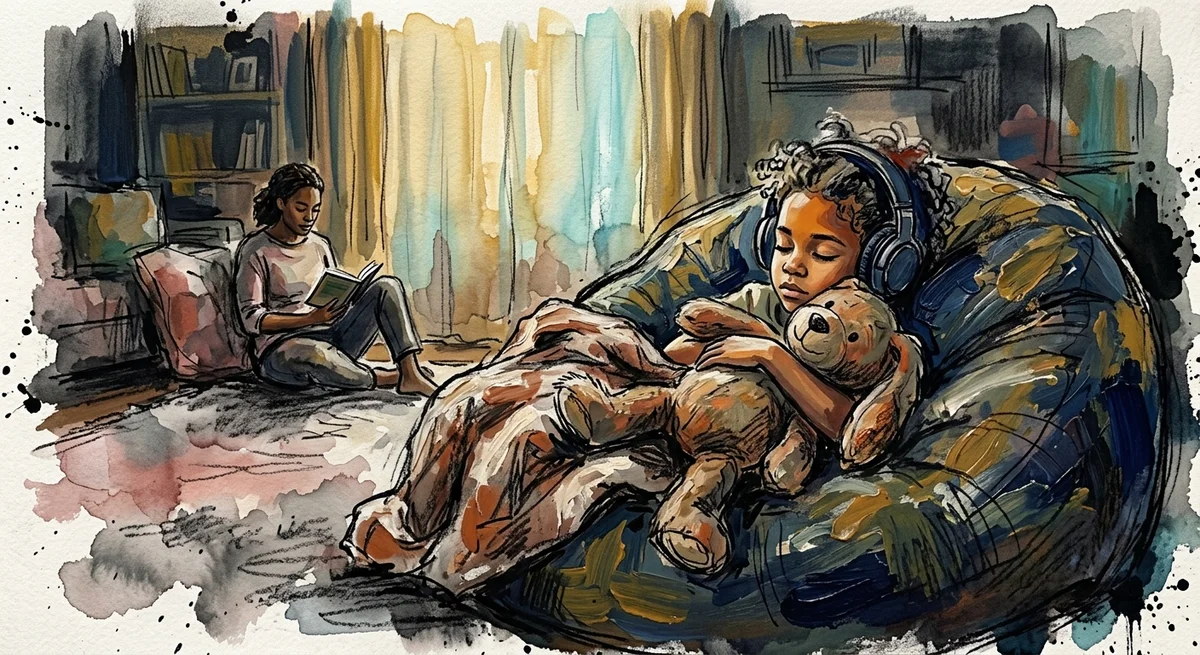
For many neurodivergent children, deep decompression looks like:
Intensive solo play with a special interest, with no interruption and no time limit
Repetitive, low-stakes screen time — not as a reward but as a genuine nervous system regulator
Physical movement on their terms: rocking, spinning, bouncing, or long walks with no destination
Sensory comfort: weighted blankets, dimmed lights, a particular smell or texture that signals safety
Silence, or a very specific kind of sound — white noise, a familiar playlist, a show they have already seen a hundred times
Your job during this time is not to provide enrichment. It is to provide safety and absence of pressure. Resist the urge to suggest crafts, invite friends over, or check in with questions every twenty minutes. Proximity without demands is one of the most regulating things you can offer.
On KinClub: User Rooms lets every child in your family customise their own private space on the platform — their layout, their colours, their pinned interests and content. It is a small but real way to honour the idea that your child deserves a space that reflects exactly who they are, on their terms. Explore it at kin-club.com
Co-regulation is not a one-way street. You cannot pour calm into a dysregulated child from an empty cup, and a week of managing a masking child — anticipating meltdowns, advocating at school, fielding the Friday crash — is its own kind of exhaustion.
A low-demand weekend works best when parents release some of their own pressure too. That means letting go of the mental list of things that "should" happen this weekend. It means not performing cheerful productivity while quietly seething. It means admitting that you are also tired, and that recovery is not just for the kids.
This might look like:
Accepting help — from a partner, a family member, anyone who can take an hour
Lowering your own standards for the weekend (the laundry can wait until Monday)
Sitting near your child without fixing anything — just being present and regulated, which in itself communicates safety
Finding your own decompression in whatever small form is available to you
You are not being a passive parent. You are being an attuned one.
On KinClub: The Family Calendar makes it easier to block out time intentionally — including low-key family days with no scheduled events. Both parents can view and edit the calendar together, which helps make the low-demand weekend a shared commitment rather than one parent carrying it alone. Try it at kin-club.com
Somewhere along the way, we absorbed the idea that a good weekend is a productive weekend — that children should be enriched, socialised, exercised, and educated even on their days off. For neurotypical kids in manageable environments, that might be fine. For a neurodivergent child who has spent five days performing normality, it is a recipe for burnout.
A low-demand weekend is not lazy parenting. It is precision parenting — identifying exactly what your child needs and delivering it, even when it looks like nothing from the outside.
The research on autistic burnout is clear: when masking demands are relentless and recovery time is insufficient, children (and adults) deteriorate — cognitively, emotionally, physically. The low-demand weekend is not a treat. It is maintenance.
And here is the softer truth: children who are given consistent, low-demand recovery time tend to have more capacity, not less. They re-enter the week with reserves. The meltdowns get shorter. The flexibility slowly grows. Not because you pushed harder, but because you finally gave the nervous system the rest it was asking for.
Let the crash happen without panic — it means they trust you
Remove demands before they are asked for, not as a response to a meltdown
Match your energy to theirs — calm, unhurried, present
Protect the unstructured time fiercely, especially from well-meaning family plans
Notice what helps your child most and make it easier to access next weekend
The low-demand weekend will not look impressive on the family highlight reel. There will be no enriching outings, no crafts, no big family meals. There might be a lot of beanbag time and familiar TV and quiet sitting.
That is okay. In fact, that might be exactly right.
Your child spent all week being someone the world could manage. This weekend, let them be someone you can love exactly as they are — unmasked, unhurried, and finally, finally home.
We're passionate about helping families find a healthy balance with technology. Our team creates content on healthy screen time, educational tech, and building strong family connections in the digital age.