
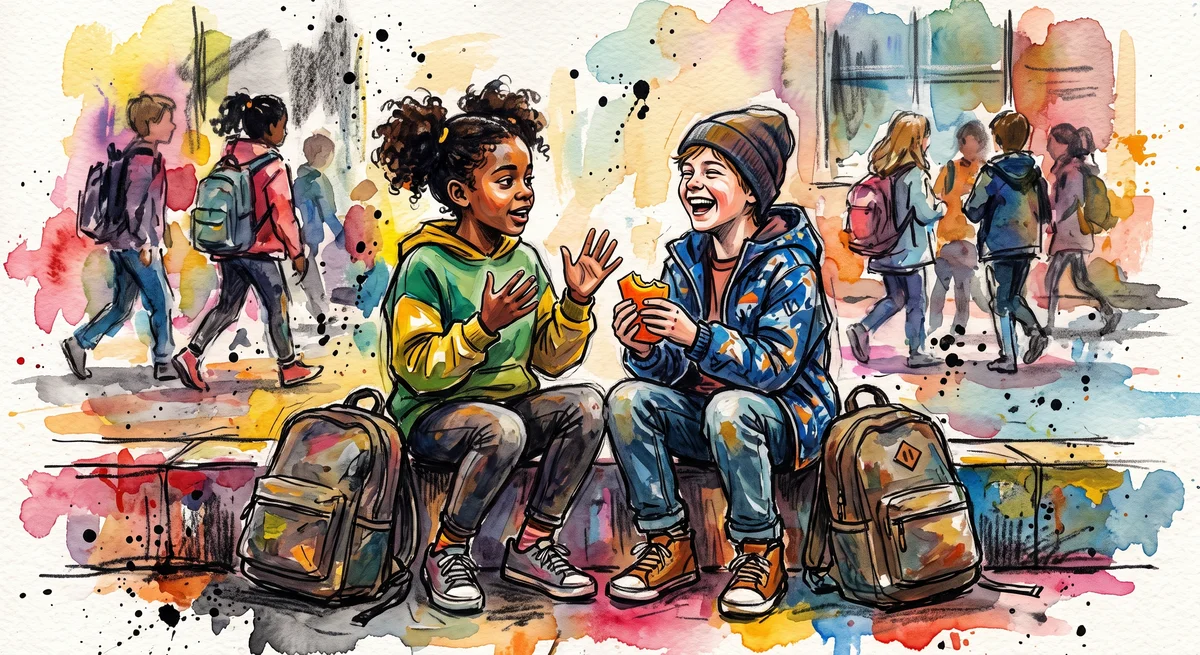
Nobody Charts the Day Your Kid Makes a Friend. Maybe We Should.
Why new friendships count as a real milestone for kids 6 to 12, and how to support the skill without hovering.
Read More
parentingfriendship
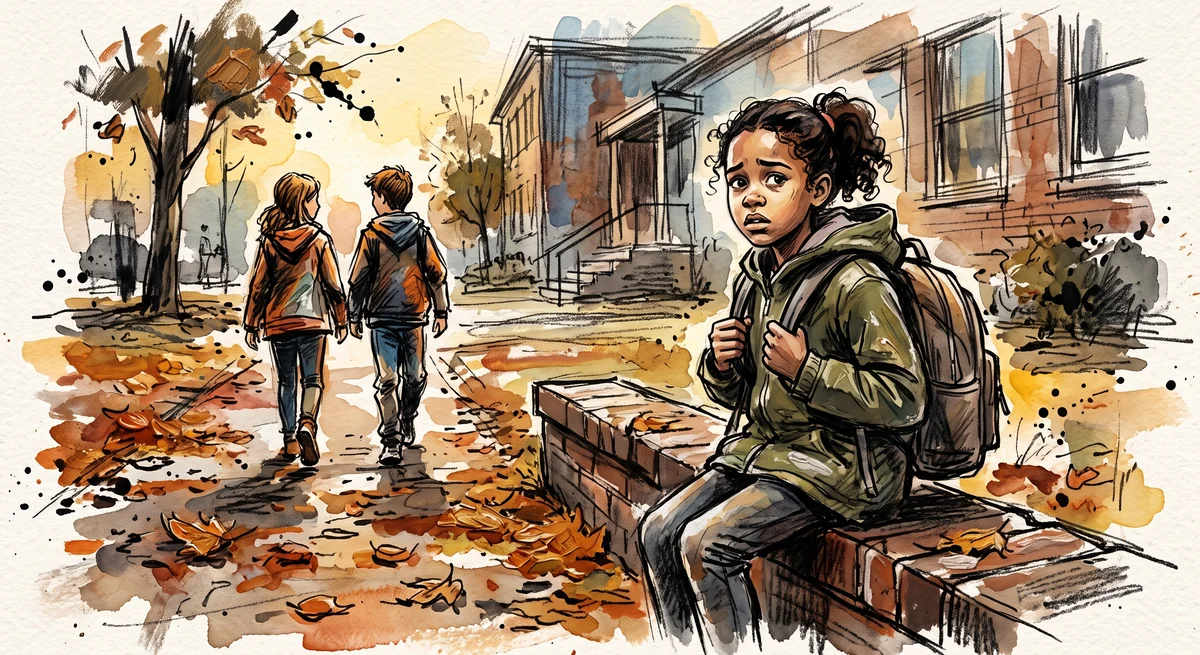
Best friend drama lands years earlier than most parents expect, and late September is when it surfaces. Why friend groups reshuffle a month into term, and how to coach your child through the conversation instead of having it for them.
She got in the car on Thursday and said Maya does not want to sit with her at lunch any more. Nothing else for the rest of the drive. You spent the evening running scenarios while she watched telly like it was fine, and now it is half past eleven and you are still awake trying to work out whether this is a bad week or the start of something.
Most of us brace for best friend drama somewhere around thirteen. It arrives years earlier than that. Between eight and twelve, children stop playing with whoever happens to be standing nearby and start choosing who they belong with. Choosing means somebody gets left out of the choice, and every child in the class is quietly keeping track of where they land.
Late September is when it shows up. The first few weeks of term run on novelty, and everyone is friendly with everyone. By week five or six the groups have set into a shape, and the child who had a guaranteed lunch partner in August finds the seat taken. Nothing has gone wrong. The social map redrew itself and your kid was not consulted.
The hard part is that the anxiety runs both ways at once. She is anxious about where she stands and reads every glance in the corridor through that lens. You are anxious watching her, and one quiet car ride is all the evidence your brain needs to build the worst version. Neither of you has the full picture. The pull to close that gap by fixing it is strong.
That is usually where we go wrong. We email the teacher. We arrange the playdate. We tell her what to say and then ask afterwards whether she said it. All of it comes from love, and it still tells a nine-year-old that this problem is too big for her to carry.
The aim is not to keep your child out of friendship trouble. It is for her to come out the other side of it knowing she got herself there. You are on the sideline with a clipboard, not going on as a substitute.
Be careful with the reassurance reflex too. Telling a worried child that it will all be fine sounds kind and lands like a closed door, because it answers a question she has not finished asking. Sitting in the uncomfortable bit with her is worth more than any fix you could hand over.
The follow through is where most of these plans die. You agree on Sunday that she will ask Priya over, and by Wednesday nobody has messaged anybody. KinClub shared to-dos and reminders exist for exactly that gap, so the nudge arrives on its own instead of living in your head alongside everything else.
A few short watches on friendship fallouts and the social skills underneath them.
This particular friendship will probably sort itself out, and a different one will wobble in November. What stays with her is finding out she can walk into something awkward and come back out. Ask one more question tonight than you think you need to.
Why new friendships count as a real milestone for kids 6 to 12, and how to support the skill without hovering.
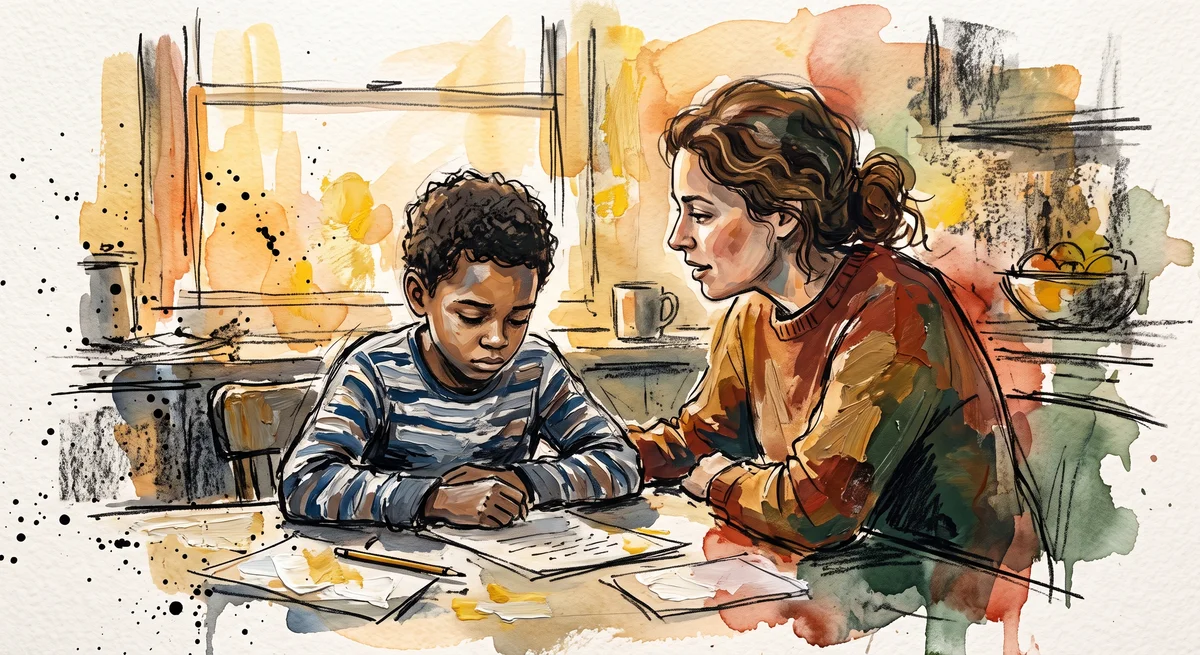
What the September confidence slide looks like, and how to rebuild it through everyday interaction rather than reassurance.
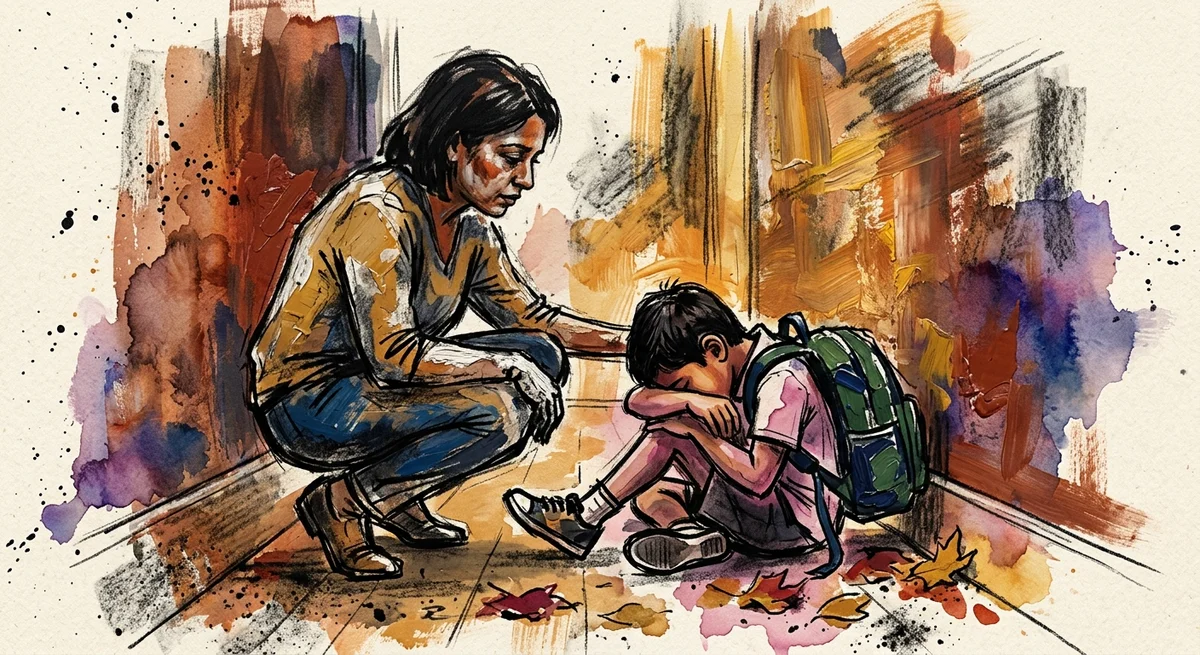
Why the meltdowns get worse six weeks in, and how to co-regulate instead of correcting.