
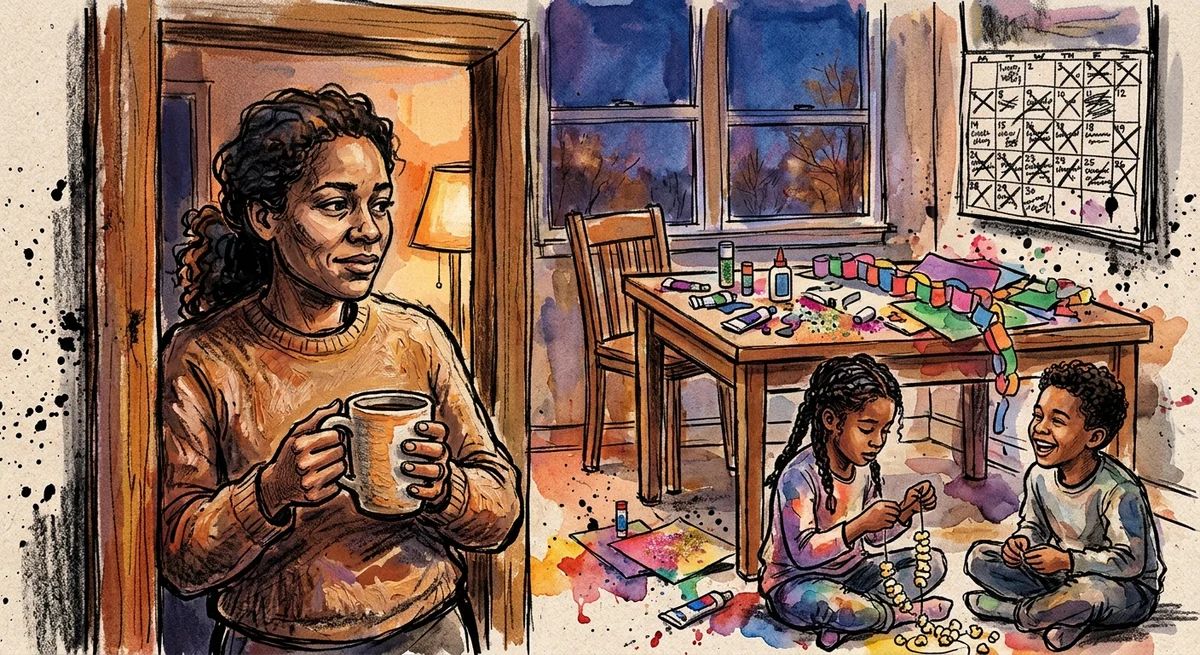
The Holidays Do Not Need to Be Bigger. They Need to Be Repeatable.
The traditions kids carry are the small ones you can repeat while tired.
Read More
holidays
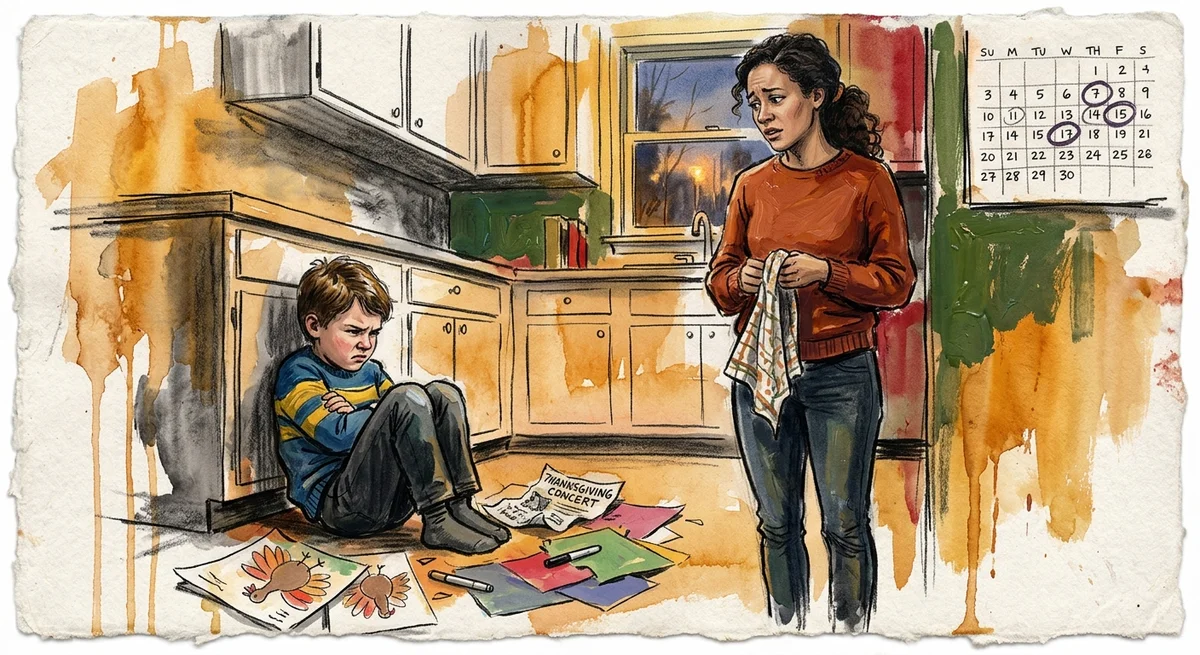
It is early November, nothing has actually happened, and your kid is coming apart over a sock. Here is why pre-holiday buildup shows up as behavior, and how to add structure before the week turns into a fight.
It is the first week of November. Nobody has traveled anywhere, nobody has cooked a turkey, and there is not a single present in the house. Your eight-year-old just screamed at you about a sock.
If you are standing in the kitchen trying to work out where that came from, you are not missing a clue. The part of the holidays that has not happened yet is already in the house.
Kids do not experience the holidays as a date on a calendar. They experience them as a long, shapeless stretch of something-big-is-coming, with no clear sense of whether that means Thursday or six weeks from Thursday. A seven-year-old asking about Thanksgiving every day is not nagging you. They genuinely cannot place it.
And the body does a poor job of telling thrilled apart from overwhelmed. Both come with a fast heartbeat, a short fuse, a stomach that skips lunch, and a bedtime that stops working. Your kid is not sad about the holidays. They are revved about them, and revved is expensive to carry around all day in a classroom.
Then the week itself gets less predictable. Class parties land on random afternoons. There are early dismissals and half days. Grandparents call to sort out travel while everyone is trying to eat. Bedtime slips because a cousin is visiting and nobody wants to be the parent who ends it. The regular shape of the week quietly goes soft right when your kid needs more of it, not less.
That is what makes this stretch so confusing to parents. You braced for a happy kid and got a brittle one. The behavior looks like ingratitude or regression, and it reads as a problem with your child, when it is mostly a problem with the shape of their November.
The move here is boring and it works: decide what stays fixed now, in early November, while things are still mostly calm. Waiting until the blowup means you are negotiating with a dysregulated kid at 9pm, and you will lose.
The anchors matter more than the number of them. A kid who knows that dinner happens and bed happens, no matter what else the day did, has somewhere to put the extra energy. A kid whose evenings keep shifting has to re-read the room every single night, and that is tiring work for someone who is already running hot.
It also helps to have one place a kid can go when they are over the line but not in trouble. Not a punishment spot. A place where the volume comes down for a few minutes.
None of this makes the next six weeks smooth. It just means the hard moments stay small, because the floor under them did not move. Add the structure this week, while the sock fight is still about a sock.
The traditions kids carry are the small ones you can repeat while tired.
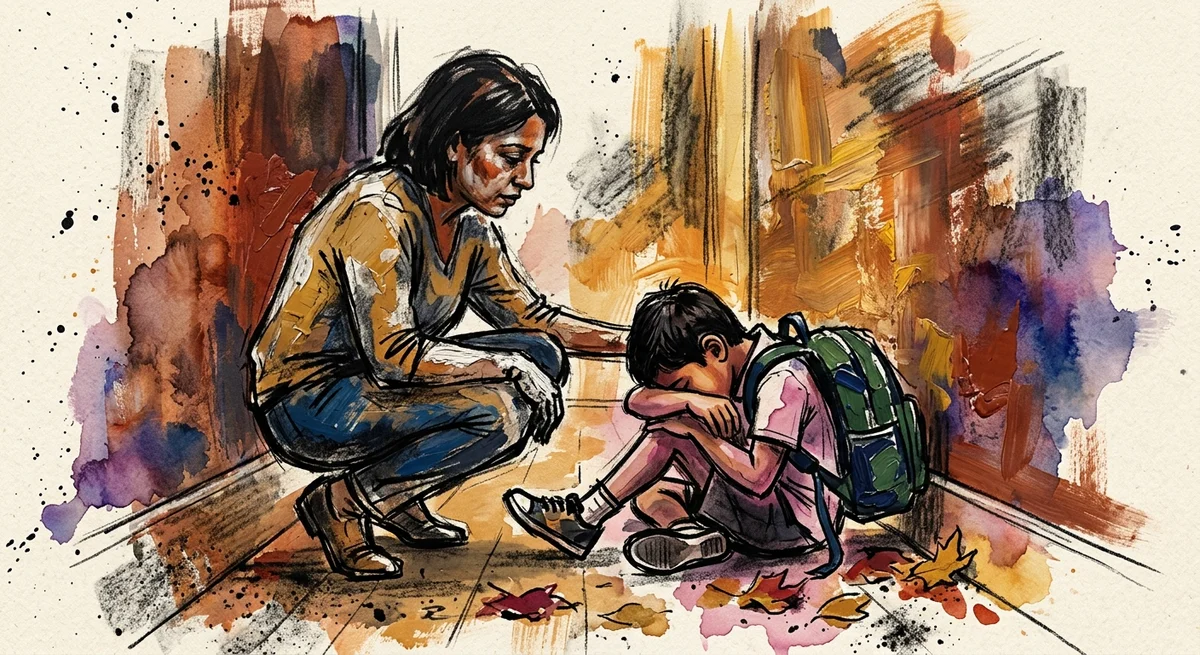
Why the meltdowns get worse weeks in, and how to co-regulate instead of correcting.
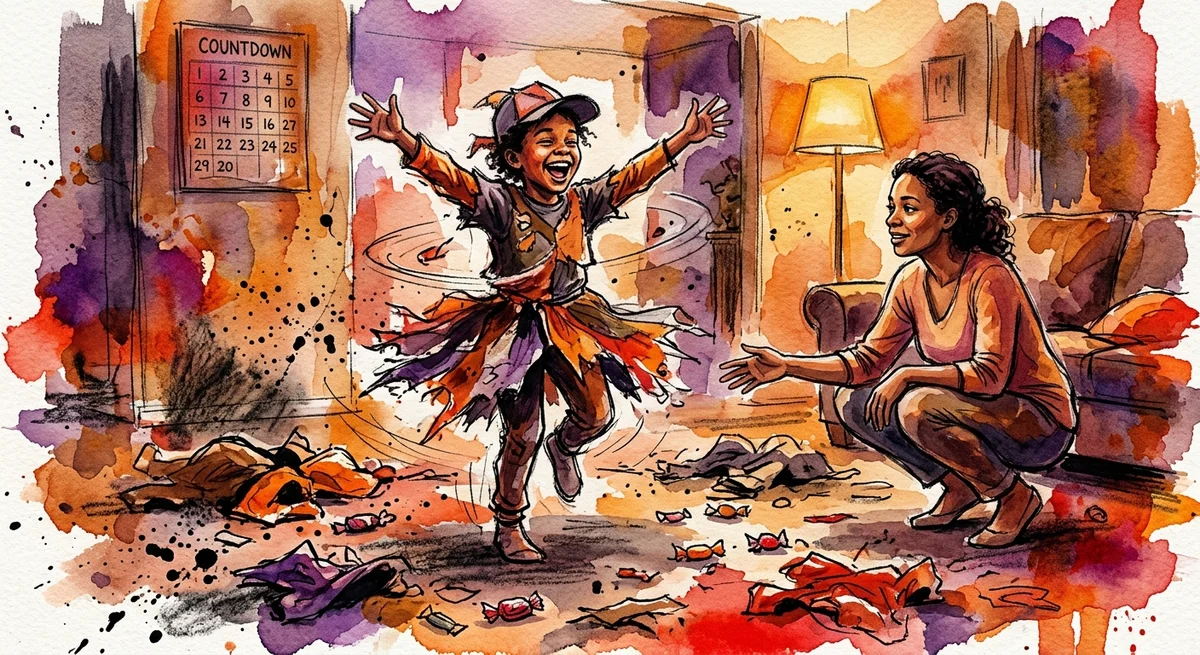
What overstimulation looks like during a long buildup, and how to channel the extra energy.