
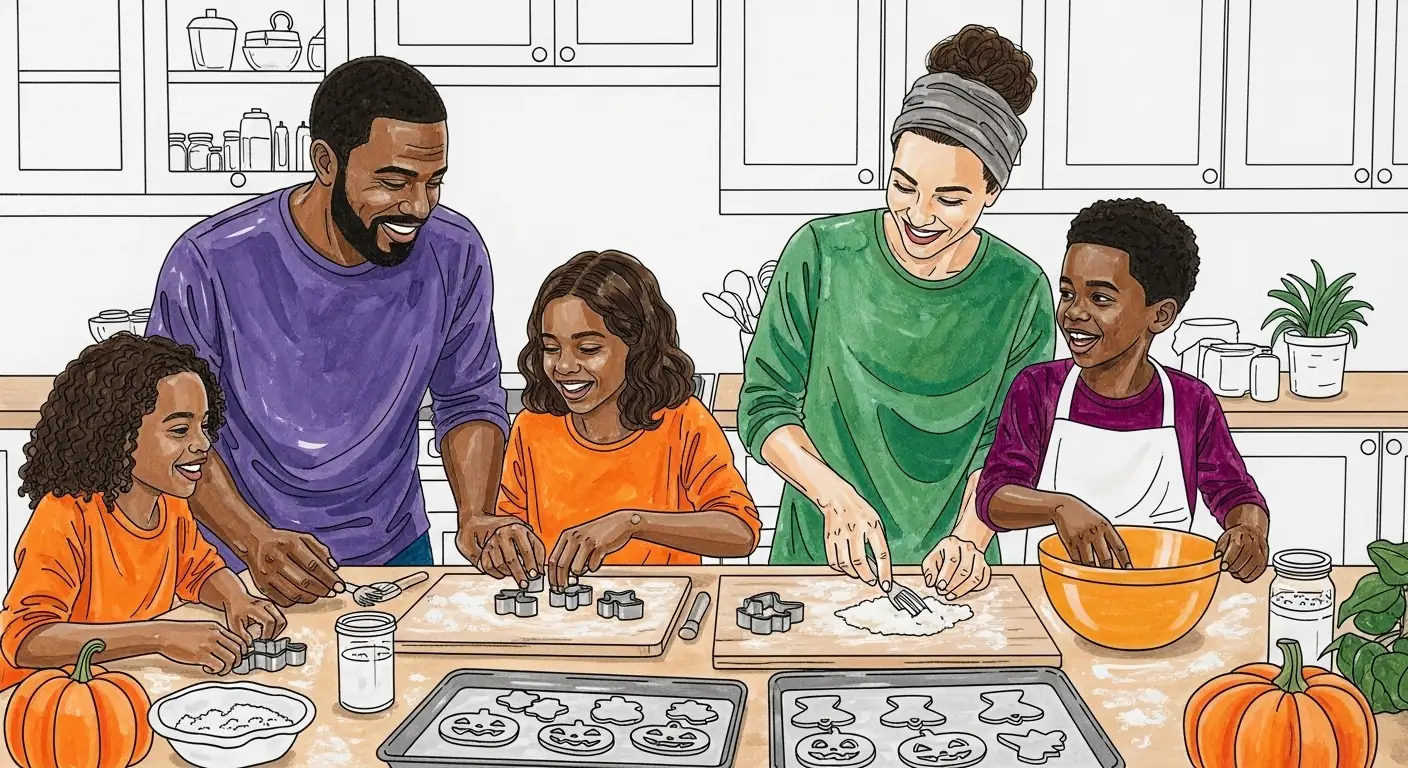
Beyond Candy and Costumes: 10 Wholesome Halloween Traditions for Families
Creative Halloween traditions like scavenger hunts, themed baking, and story nights that build memories beyond sweets and costumes.
Read More
halloweentraditions
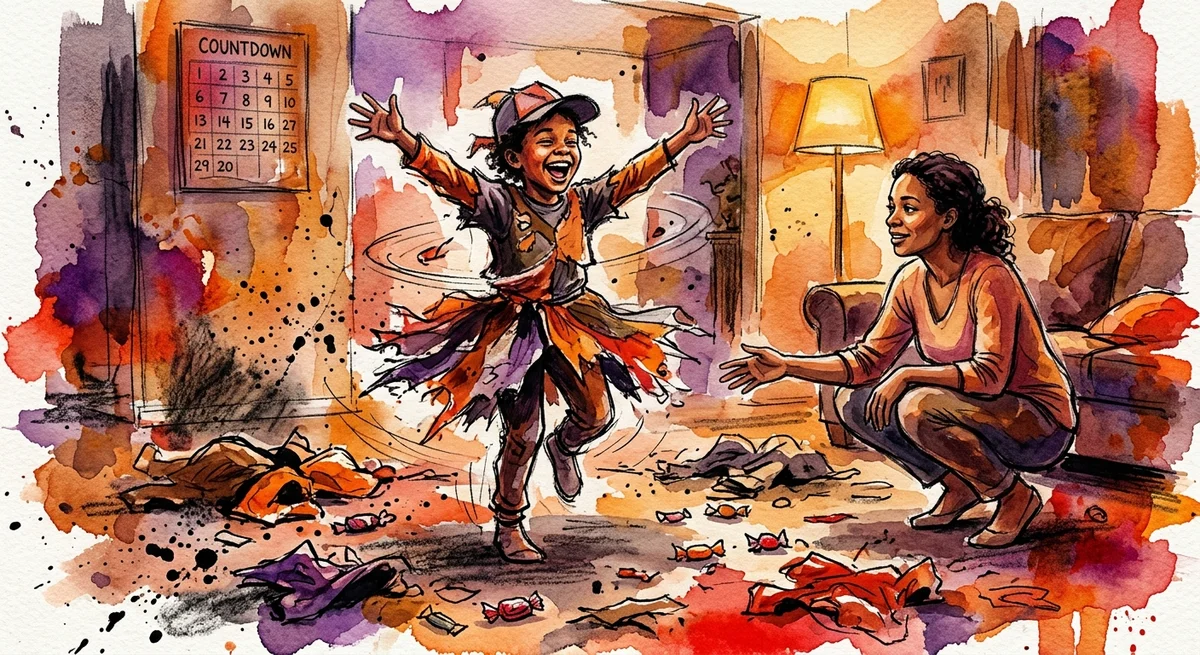
Halloween buildup starts weeks before the actual day, and the costumes, candy, and countdown excitement show up at home as meltdowns and wildness. What overstimulation looks like in early October, and how to channel the extra energy before it turns into a nightly battle.
Your son has worn the same plastic sword to breakfast three mornings this week. He is not allowed to use it on his sister, he knows that, and he still swings it at her every time, then acts shocked when you take it away. Halloween is almost four weeks out. He is already living in it.
Early October is a strange stretch for kids. Costumes show up in stores, the countdown chart goes on the fridge, candy appears at the grocery store checkout, and every conversation at school turns into who is being what for Halloween. None of that is too much on its own. Stacked together for four straight weeks, it adds up to more than a young nervous system knows what to do with.
Overstimulation does not usually look like excitement. It can look like the opposite of what you would expect from a kid counting down the days to their favorite holiday. Watch for the kid who cannot get through dinner without narrating an entire costume plan, the kid who goes from giggly to furious inside five minutes, the kid who falls apart over something unrelated right after a sugary snack or a loud class party. That is not bad character showing up. It is a full tank with nowhere for the extra to go.
Kids this age have not learned how to sit on big anticipation for a month straight. Adults can hold excitement at a simmer. Kids boil over, and it comes out as wildness, defiance, or tears about something that has nothing to do with Halloween at all.
The instinct is to tamp the excitement down. Tell them to calm down, ban costume talk at the table, threaten to cancel Halloween if the behavior does not improve. None of that works, because you cannot talk a kid out of a feeling that is running on adrenaline. What works is giving that energy somewhere to go.
The goal is not to make the excitement disappear. It should not disappear. Give it a job and it stops showing up as a fight over a cape at the dinner table.
A few short watches on Halloween prep and keeping wound-up energy moving in a good direction.
Halloween chaos is not a discipline problem. It is energy looking for a job. Give it four or five small jobs between now and the thirty-first, and the month gets easier for everyone at your table, cape included.
Creative Halloween traditions like scavenger hunts, themed baking, and story nights that build memories beyond sweets and costumes.
Expert-backed tips for handling the Halloween candy haul without the stress or the sugar fights.
Why the meltdowns get worse six weeks into the school year, not on day one, and how to co-regulate instead of correcting.