
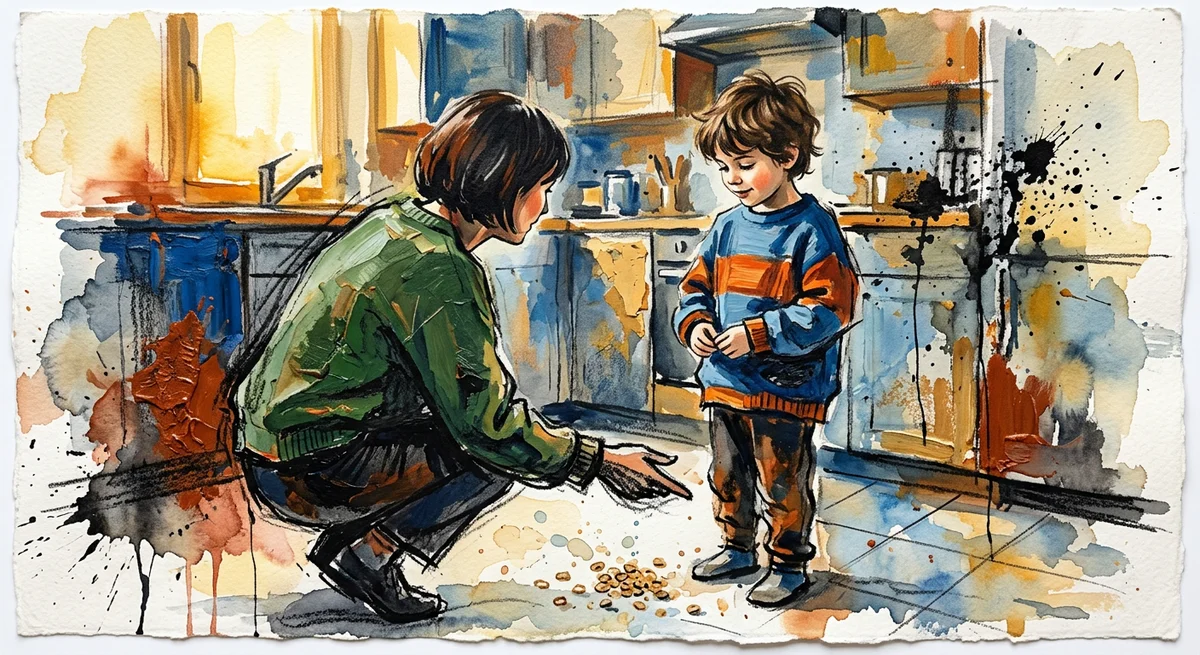
Natural vs Logical Consequences: Positive Discipline That Actually Works
Learn the difference between natural and logical consequences, why they work better than punishment, and how to use both to raise resilient kids.
Read More
parentingdiscipline
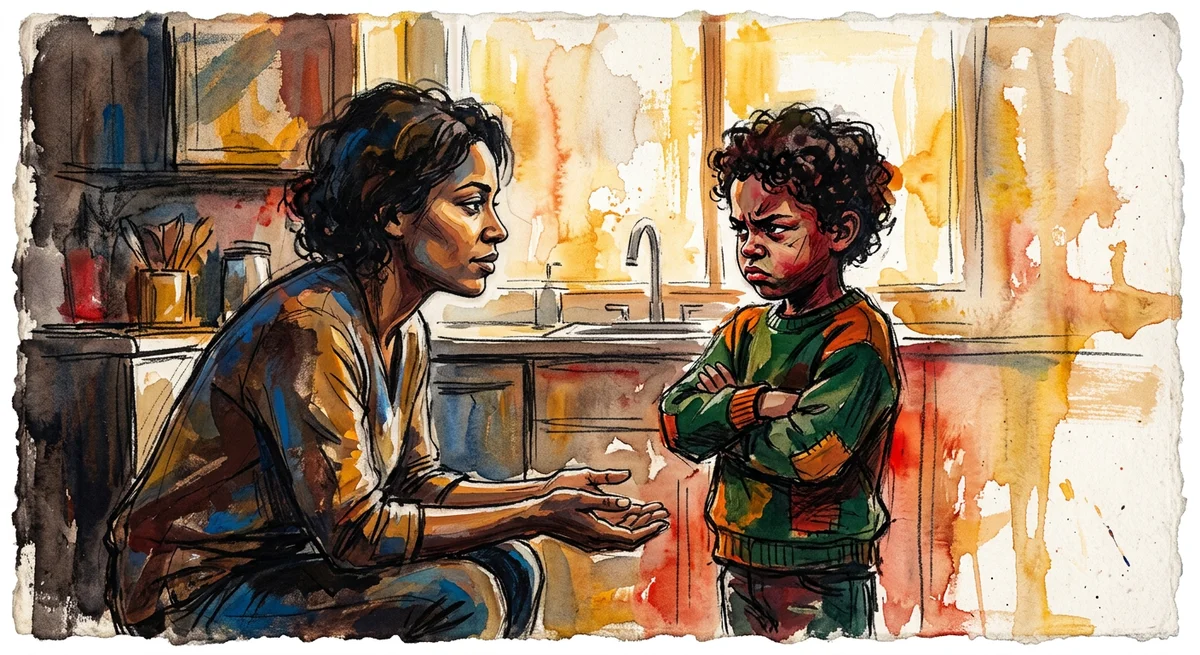
Backtalk and disrespect are among the most draining parenting challenges. This guide gives you practical, connection-based strategies to respond with confidence — not conflict.
You ask your eight-year-old to put their shoes on. They sigh heavily, roll their eyes, and snap: "You always make me do everything." And just like that, your blood pressure climbs.
Backtalk and disrespect are among the most emotionally charged challenges parents face — not because they are rare, but because they feel personal. When a child speaks rudely to the person who loves them most, it is hard not to take it to heart.
Here is the reassurance you need: this is normal, and you are not failing. School-age children are in a critical developmental window where they are testing boundaries, developing their sense of self, and learning how to navigate big emotions — often badly at first. The goal of this post is to help you respond with calm authority rather than reactive frustration, and to build a home where respect is modelled and expected — not just demanded.
Understanding why children talk back does not mean excusing it. It means you can respond to the root cause rather than just the surface behaviour.
The push for independence. From around age six, children begin asserting themselves as individuals. They want some control over their world. When they feel powerless — when a parent says no or issues a directive — talking back can be a clumsy attempt to reclaim agency.
Emotional regulation is still developing. The part of the brain responsible for impulse control — the prefrontal cortex — is not fully developed until the mid-twenties. A seven-year-old who snaps when they are tired or frustrated is not being calculating. They are flooded.
They are copying what they see. Children absorb the communication patterns around them. If sharp tones or dismissive language appear regularly — between adults, in shows they watch, among siblings — kids will borrow those tools.
An unmet need is speaking loudly. Hunger, tiredness, sensory overload, social stress from school — these all lower a child's tolerance and raise their likelihood of lashing out at the safest person nearby: you.
Children do well when they can. If your child is not behaving well, it is worth asking: what is getting in the way?
When a child is disrespectful, the instinct is to match their energy or clamp down hard. Neither tends to work well.
Avoid escalating. Raising your voice or becoming sarcastic signals to your child that loud, aggressive communication is effective. It also moves you both out of a space where anything productive can happen.
Avoid long lectures in the moment. When a child is dysregulated, their brain is not in a state to receive and process complex information. You will be talking to a wall — and growing more frustrated because of it.
Avoid threats you cannot follow through on. Ultimatums issued in anger often cannot be enforced, which teaches children that your limits are negotiable.
Do not give in to end the conflict. If backtalk results in getting what they wanted, it becomes a reliable strategy. The short-term relief is not worth the long-term lesson it sends.
This is the hard part — staying grounded when you feel provoked. But it is also the most powerful thing you can do.
Pause first. Even a two-second breath before responding changes everything. You are modelling self-regulation while also giving your nervous system a moment to come down from its reactive state.
Keep your response short and steady. Something like: "That tone is not okay. When you are calm, we can talk about what you need." Short, clear, and non-punishing — then stop engaging until things settle.
Name the behaviour, not the child. There is a meaningful difference between "You are being so rude" and "That way of speaking is not respectful." The first attacks who they are. The second addresses what they did — and leaves room for them to do better.
Hold the boundary without a power struggle. You do not need to win every exchange. You need to hold the line calmly and re-engage when both of you are regulated. Refusing to get drawn into a shouting match is not weakness — it is leadership.
The goal is not to silence your child — it is to redirect their communication into something that actually works.
Name the feeling, not just the rule. When things are calm, help your child connect words to their inner experience. Instead of only saying "do not talk back," try: "I can see you were really frustrated. What could you say instead?"
Introduce simple scripts. Some kids genuinely do not know what to say when they are upset. Practise together during low-stakes moments: "Mum, I disagree with that" or "Dad, can we talk about this?" are real alternatives to eye-rolls and snapping. Role-play these at dinner or on a walk.
Validate the emotion, not the delivery. "I know you were angry about turning the game off. Being angry is okay. Yelling at me is not." This distinction matters enormously — children need to know their feelings are not the problem, only the way they expressed them.
Create a family cool-down signal. Some families use a code word or a simple gesture that means "I need a moment to calm down before I can speak nicely." It gives children an exit ramp from escalating, and it normalises the idea that everyone — adults included — sometimes needs a pause.
Long-term change comes from the climate you build day-to-day, not just how you respond in the heat of the moment.
Model the standard you expect. Your children are watching how you speak to them, to your partner, to people on the phone. If you use a sharp or dismissive tone regularly, it will show up in theirs. This is not about being perfect — it is about being intentional.
Catch respectful moments and name them. When your child handles frustration well — even marginally better than usual — point it out: "I noticed you were really annoyed just then and you still spoke calmly. That was really mature." Positive reinforcement for respectful communication works far better than only responding to the bad.
Make respect a family value, not just a rule. Talk about it explicitly. What does respect look like in your family? How do you treat each other when things are hard? Children who understand the why behind an expectation are far more likely to internalise it.
Check in on their world. Disrespect often spikes when something is going on beneath the surface — social tension at school, anxiety about a change, tiredness from a packed schedule. Regular, low-pressure connection (a walk, a bedtime chat) gives your child a chance to unload before the pressure builds.
If talking back is constant and escalating despite your best efforts, it is worth looking more closely.
Use consequences that are connected. If a child speaks rudely, a consequence that makes sense might be pulling back on an extra favour or planned treat — not as revenge, but because the interaction affected you. Natural and logical consequences land very differently to arbitrary punishments. See our post on natural vs. logical consequences for a deeper look.
Consider what else is happening. Persistent disrespect can sometimes signal anxiety, learning difficulties, friendship struggles, or other stressors that need direct attention — not simply more discipline.
Seek support without shame. A family therapist or parenting coach is not a sign of failure. It is a sign that you take your relationship with your child seriously. Many families benefit enormously from even a few targeted sessions.
These videos offer perspective and practical tools for handling backtalk and disrespect:
Managing disrespect and backtalk is genuinely hard — not because you are doing it wrong, but because it touches something deep. You love this child. Their words sting. And in the middle of a difficult moment, staying calm and connected can feel almost impossible.
But every time you manage to pause instead of react, name the behaviour instead of the child, and hold the boundary without a fight, you are doing something important. You are showing your child what it looks like to handle conflict with dignity. And bit by bit, they will learn to do the same.
KinClub is here to support the whole family — the connection, the communication, and the moments in between. Come join us at kin-club.com.
Learn the difference between natural and logical consequences, why they work better than punishment, and how to use both to raise resilient kids.

How parental habits and communication patterns shape child behaviour, with practical strategies for modeling respect at home.
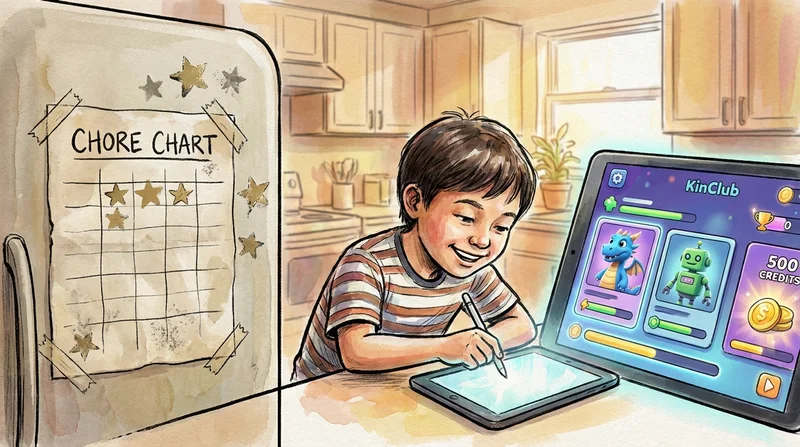
Explore the science of motivation and discover how to turn kids into willing contributors using gamified chore systems.