
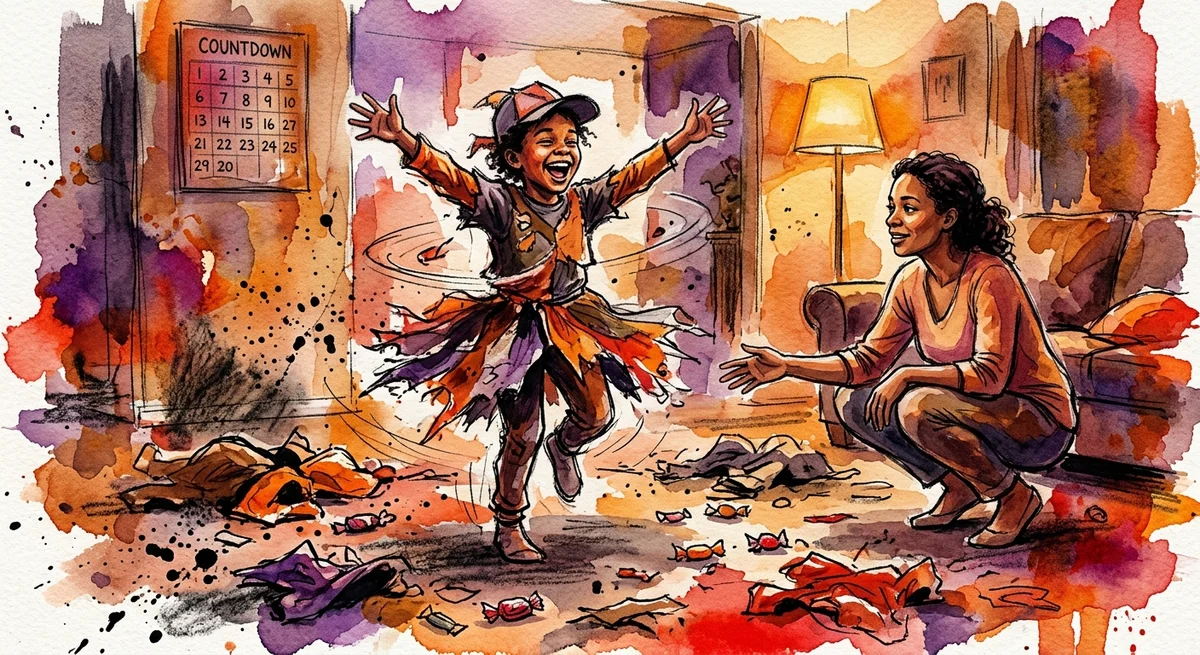
Halloween Is Four Weeks Away. Your Kid Is Already Losing It.
What Halloween overstimulation looks like in early October, and how to channel the extra energy before it turns into a nightly battle.
Read More
halloweenparenting
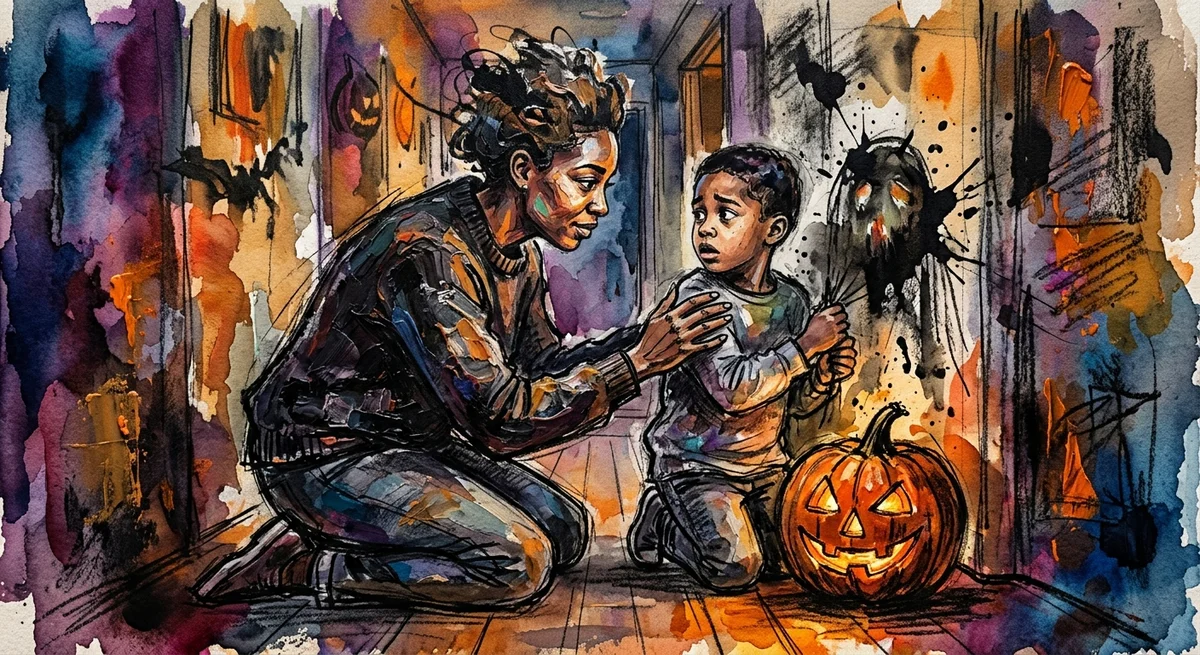
A wave of new fears during Halloween season is a normal part of growing up between ages six and twelve, not a sign something is wrong. Here is what fear phases look like this time of year, and how to support your child through one instead of talking them out of it.
Your eight-year-old suddenly will not walk past the inflatable skeleton on the neighbor's lawn. Your ten-year-old, two years past needing a nightlight, now wants her door left open at night. If a wave of new fears rolled in right as the Halloween decorations went up, you are not imagining it, and your kid is not regressing. Fear phases are a normal, expected part of growing up between ages six and twelve, and October happens to be the month that puts every one of them on display at once.
Somewhere around age six, kids get a lot better at imagining things that are not standing in front of them. That is a big cognitive leap, and it is also exactly what makes a costume shop, a movie trailer glimpsed over an older sibling's shoulder, or a motion-activated lawn skeleton so much more unsettling than it would have been two years earlier. Child development researchers have mapped out a pretty consistent pattern: younger kids in this age range tend to fear the supernatural and the imaginary, while kids closer to twelve start fearing more realistic things, like getting hurt, getting embarrassed in front of friends, or something bad happening to a parent. Both kinds of fear are doing their job. They are a sign your kid's brain is getting better at predicting danger, even when the predicting goes a little haywire.
Halloween turns every dial up at once. Costumes blur the line between "that is clearly my neighbor Dave" and "that is a headless man standing on a porch," which is confusing even for a nine-year-old who knows better. Decorations are built to startle on purpose. Movie trailers, older siblings' shows, and random clips that show up mid-scroll expose kids to content that was never made with a seven-year-old in mind. Trick-or-treating itself asks a kid to walk up to a stranger's door, in the dark, which is a big ask even without the fog machine.
None of this means your kid is too sensitive or that you did something wrong. It means their imagination outpaced their ability to reason their way out of what it conjures, and Halloween is giving that gap more material to work with than usual.
The instinct to reassure a scared kid by minimizing the fear is understandable, but it tends to backfire. Telling a child there is nothing to be scared of tells them their own read on the world is wrong, and that does not make the fear go away. It just makes them stop telling you about it. What works better is treating the fear as real information, then giving your kid tools to handle it.
A kid who is startled for a minute and moves on is doing fine. A kid who cannot stop thinking about it hours later, has trouble sleeping for several nights running, or starts avoiding things unrelated to the original scare might need a bit more support than a Tuesday-night conversation can offer. Reading a calm story together before bed, or paging through a picture book about a friendly monster instead of a scary one, can also help settle a fear phase without ever needing to debate whether the fear makes sense.
A few short watches on understanding childhood fear and keeping Halloween season from tipping into something harder to manage.
Fear phases pass. The kid who cannot walk past the skeleton this October will likely walk right up and poke it next year. Your job in the meantime is not to talk your kid out of being scared. It is to let the fear be real, give it somewhere to go, and stay close while it passes through.
What Halloween overstimulation looks like in early October, and how to channel the extra energy before it turns into a nightly battle.
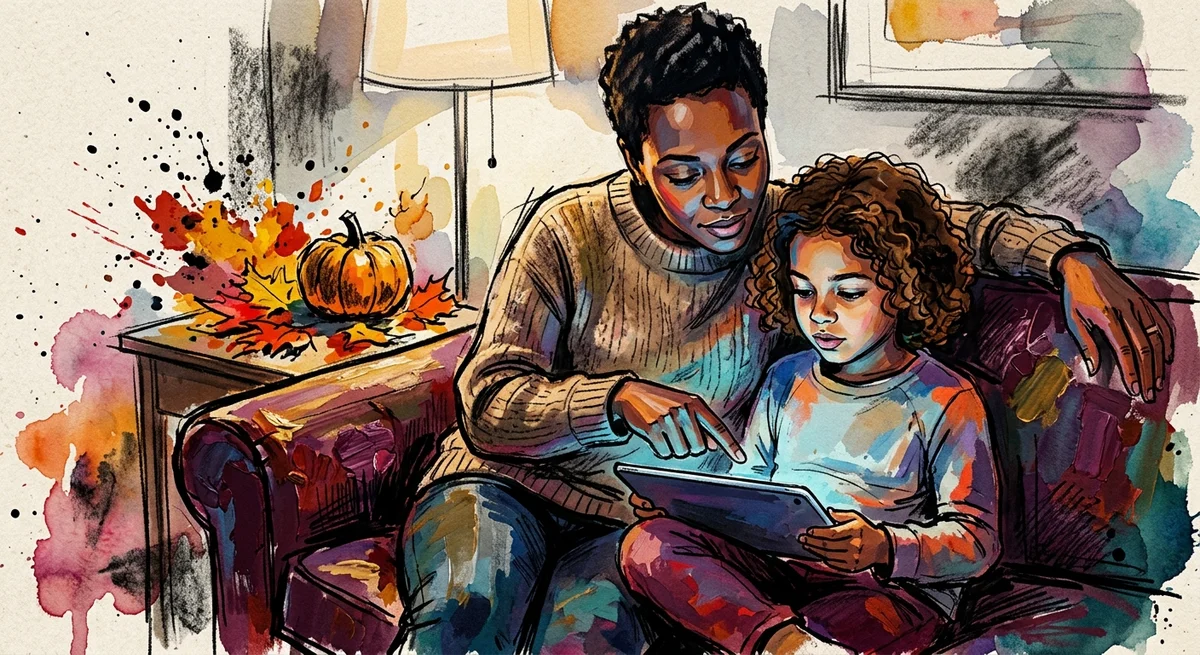
Halloween season means more screen recommendations served to your kid, and more chances for an algorithm to pick junk over something a parent would choose.
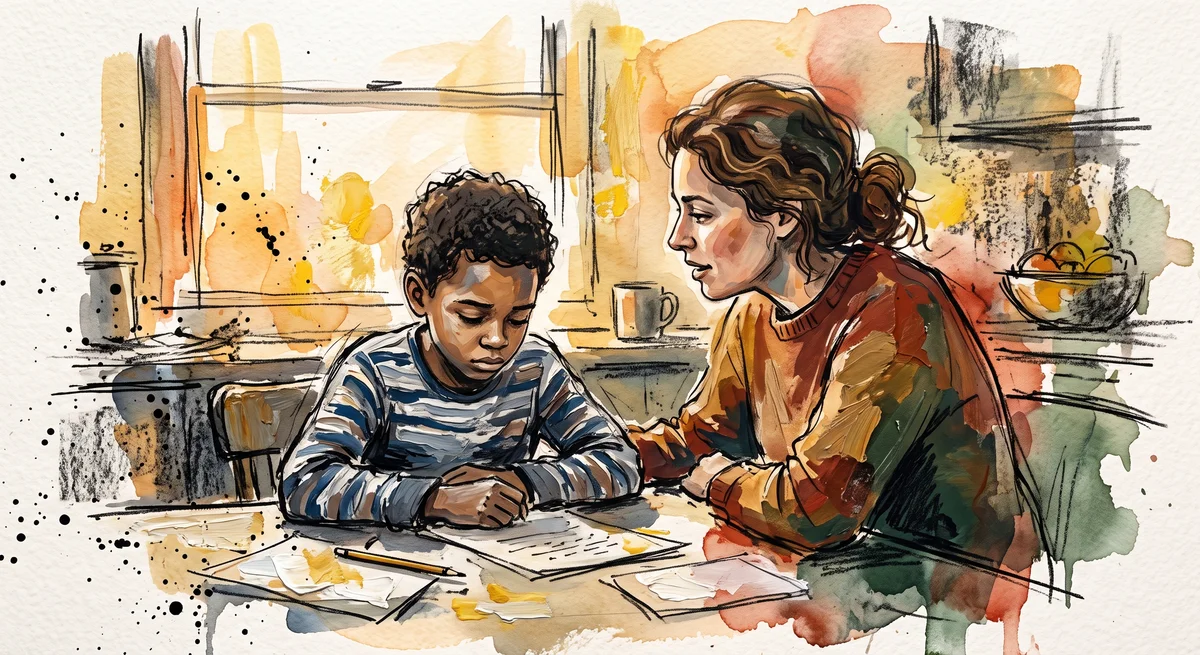
What a confidence dip looks like in kids 7 to 12, and how to rebuild it through everyday interaction rather than reassurance.