
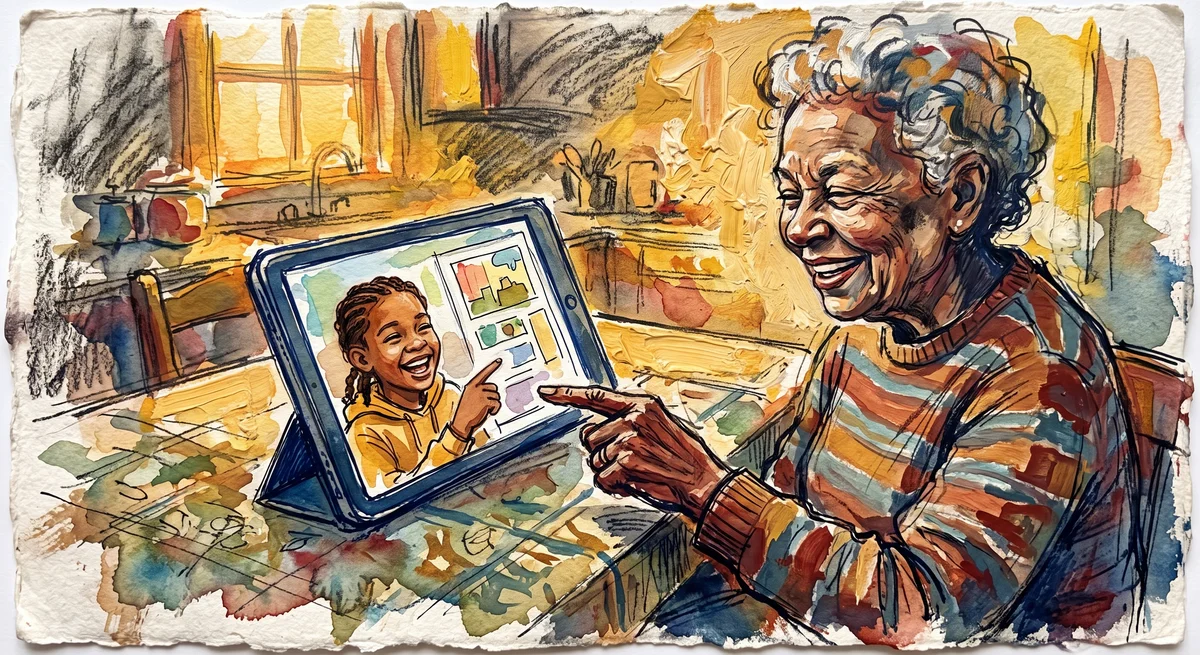
Give the Call Something To Do, and Three Minutes Turns Into Twenty
New research on grandparent video calls finds the ones that last are built around a shared activity, not a shared Q&A.
Read More
grandparentsgamesvideo calls
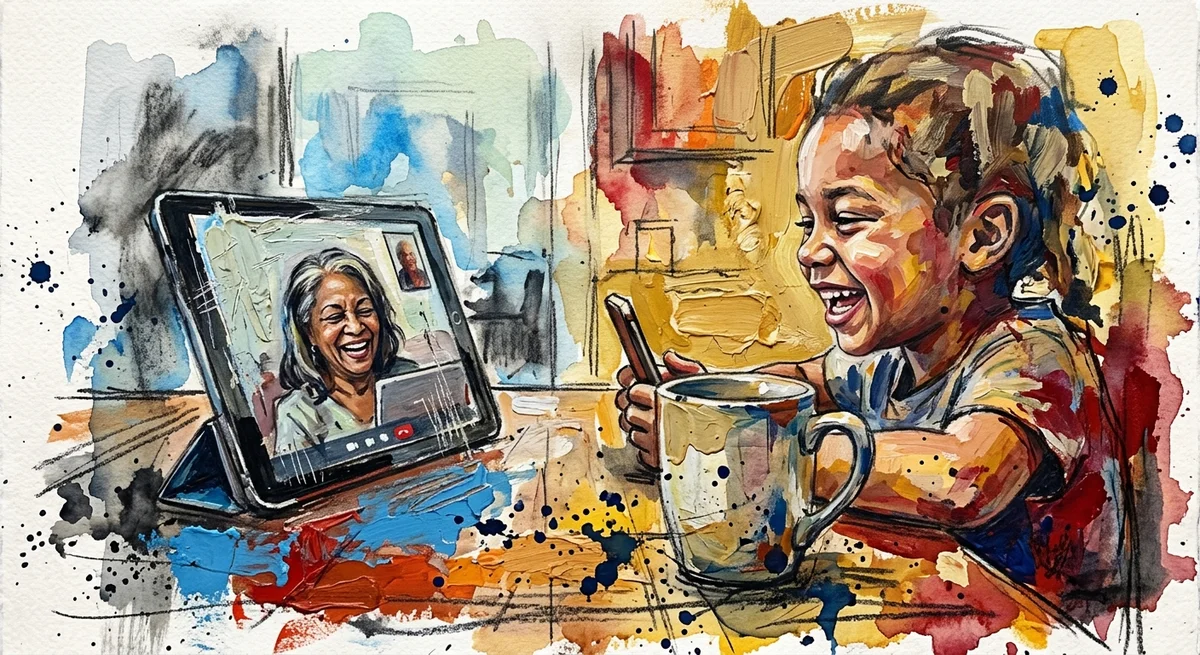
The "how was school" question kills grandparent video calls by minute two. Here is why a shared game keeps a kid in her chair, and how to start one tonight.
My neighbor Carol calls her granddaughter every Sunday at four. "How was school?" "Fine." "How was soccer?" "Fine." Then a silence neither of them knows what to do with, and the call ends at the two minute mark. Carol thinks the problem is that she is asking the wrong questions. She is not. The problem is that she is asking questions at all.
A question turns a call into an interview. The grandchild is being asked to report on her week to an adult who is not quite a parent and not quite a stranger, and most kids answer a report the way they answer a teacher taking attendance: short, flat, done. What keeps a nine-year-old in her chair is not a better question. It is something to do together that is not about her performing for an audience of one.
The awkwardness is not a sign that the relationship is thin. It is a sign that the call has the wrong shape. Two people facing each other on a screen with nothing between them but a question and an answer run out of road fast, the same way a car ride goes quiet once everyone has said what they did that day. Add a shared task, even a small one, and the two of them stop facing each other and start facing the same thing. That is a different kind of conversation. It stops being an interview and starts being a collaboration, and a kid will stay in a collaboration far longer than she will stay in an interview.
That is why a shared game works better than a shared question. A game gives both people a job: take a turn, make a move, react to what the other person just did. Nobody has to come up with something interesting to say, because the game is doing that work for them. The talk that happens around a game, the trash talk, the groaning over a bad draw, is richer than anything either of them would have produced trying to make small talk.
A game gives a call something to do instead of something to say. That is the whole trick.
Instead of opening the call with a question, open it with an invite to play something. Let the grandchild pick the game if she wants to, since kids are more willing to stay in something they chose. Keep the first round short on purpose. Five minutes of a quick game beats twenty minutes of a call that is dying anyway, and a short win leaves both of them wanting to do it again next Sunday.
A good first pick is Turf, a quick card game on a shared 4x4 grid. Two to four players, about a minute to learn, and short enough to finish in the time it would have taken Carol's call to go quiet anyway.
Once a game becomes part of the routine, the thread between calls gets easier to keep going too. Game leaderboards keep score across the family, so there is a reason to check back in before Sunday even arrives: did Grandpa take the lead again, is it time for a rematch. That small thread often carries a family from one call to the next.
Carol does not need a better opening line. She needs a reason for her granddaughter to stay in the room with her. A game gives both of them that reason, five minutes at a time, and most Sundays now the call runs long enough that somebody else has to come looking for her.
New research on grandparent video calls finds the ones that last are built around a shared activity, not a shared Q&A.
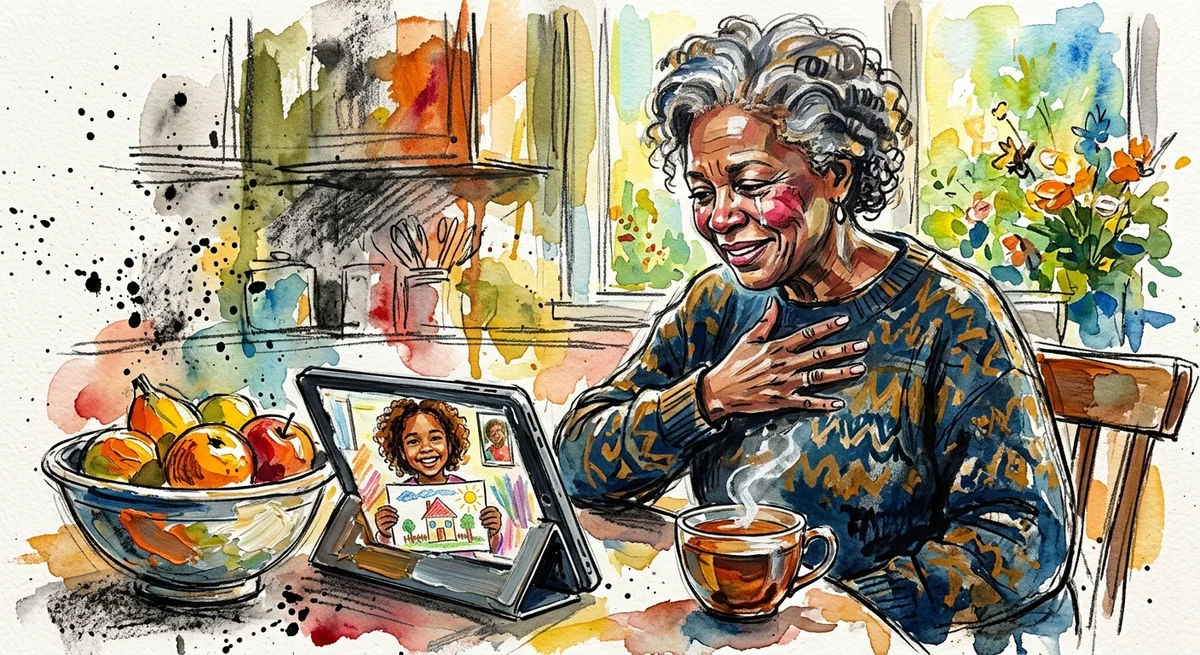
Why small daily moments beat the big monthly video call, and how to start a two-minute thread today.
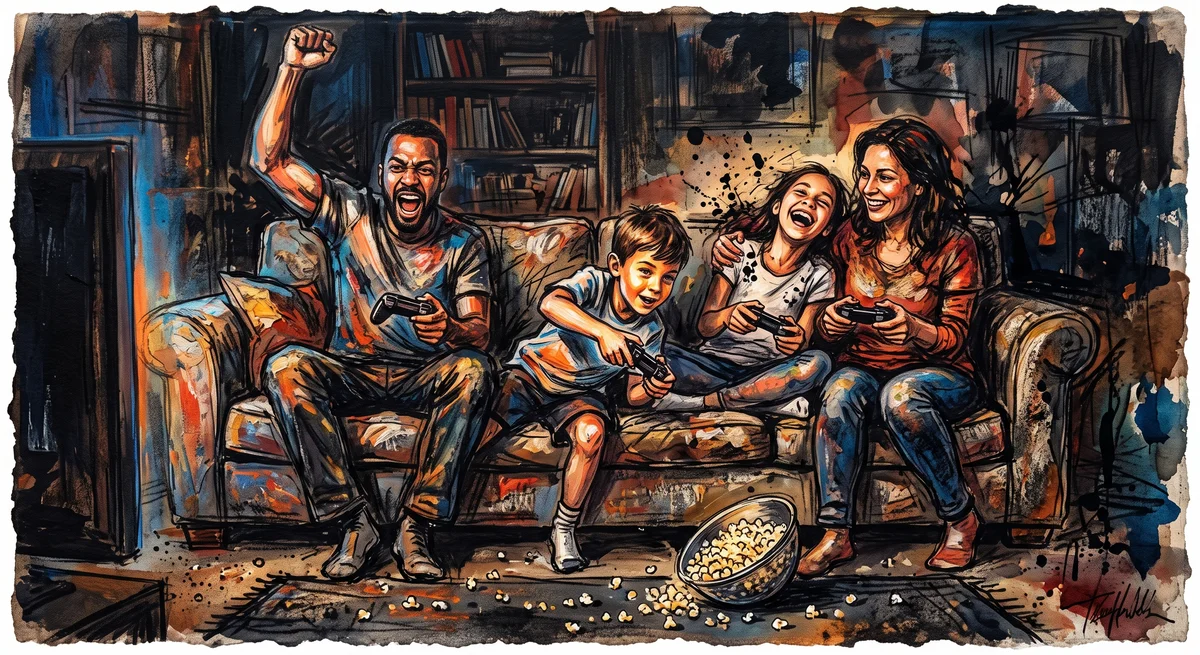
A six-year-old and a twelve-year-old can play the same game together, as long as you pick one with a low enough skill floor.