
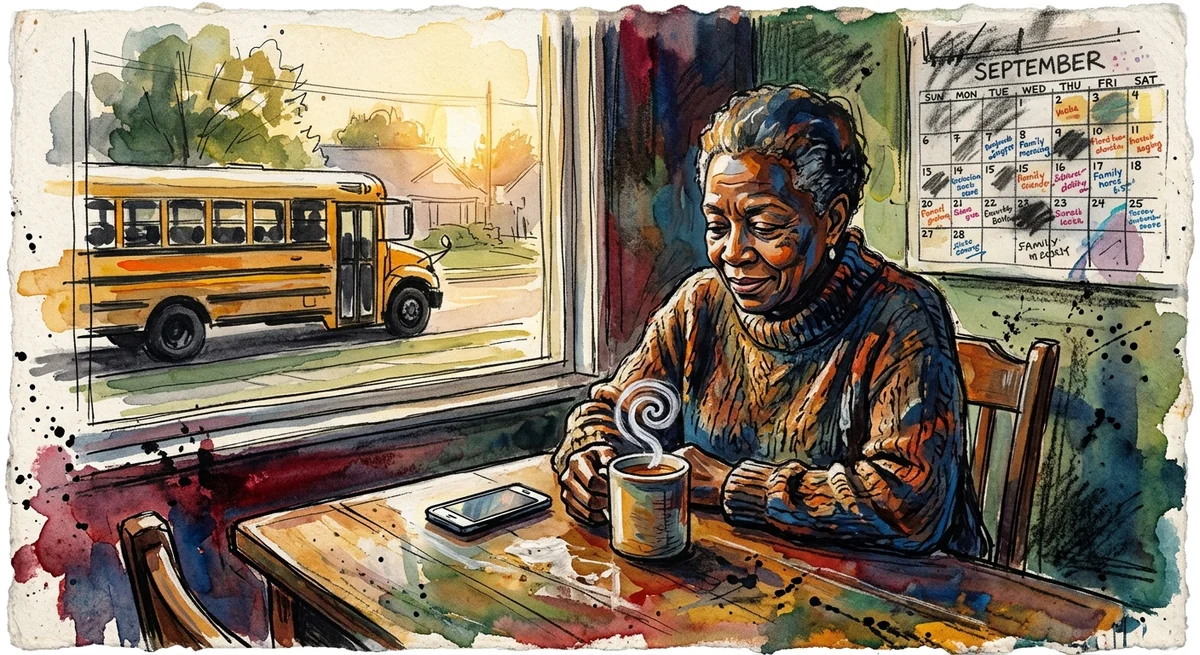
The Grandkids Stopped Calling in September. It Is a Calendar Problem, Not a Verdict.
A grandmother on why the calls fade in September, and the small asks that put her back in the week.
Read More
grandparents
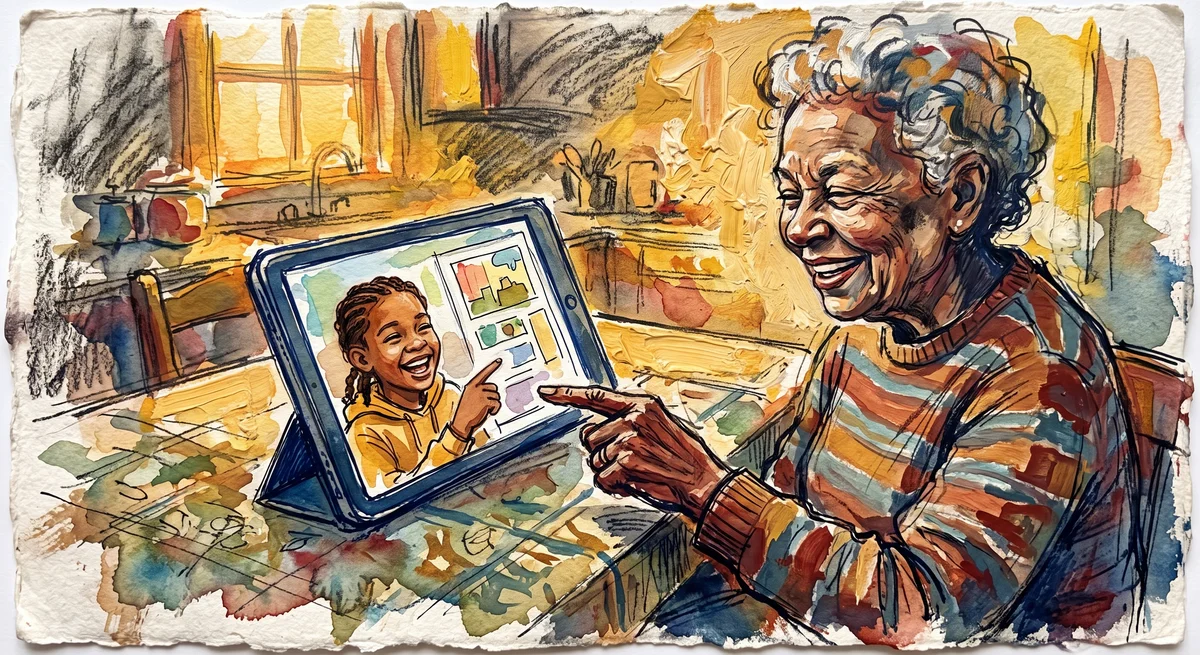
New research on grandparent video calls finds the ones that last are built around a shared activity, not a shared Q&A. Here is how to add one tonight.
My call with my granddaughter Emma lasts three minutes. I ask about school. She says fine. I ask about soccer. She says fine. Then there is a pause neither of us knows what to do with, and she says she has to go. I have been doing this long enough to know that pause. It is not boredom. It is longing with nowhere to land.
I used to think a longer call meant a better question. It does not. It means a shared thing to do.
Researchers who study video calls between grandparents and grandchildren keep landing on the same finding: a call built around a shared activity runs three to four times longer than a call built around questions alone. A story read together. A simple game played turn by turn. The activity gives the call something to do, and that is what keeps a nine-year-old in her chair.
Questions ask a child to perform. How was school. What did you do today. A nine-year-old answers those the way she answers a teacher taking attendance: fast, flat, and done. A shared activity asks her to participate instead. She is not reporting on her day. She is doing something with you, and that is the part she stays for.
I did not believe this until I tried it. One evening I pulled up a picture book on my tablet before I called Emma and asked if she wanted to read it together instead of talking about school. She said yes before I finished the sentence. Twenty-two minutes later her mother knocked on her door to say it was bath time.
The fix is not a longer conversation. It is a shorter gap between hello and doing something together. A shared game or story gives the call a shape, and a child does not want to leave early when there is a shape to hold onto. Once Emma and I had our picture book, we added a word game we play on our own screens while we talk, trading guesses back and forth like we are in the same room. The talking still happens. It just happens around something, instead of being the whole point.
KinClub has more than a dozen two-player word games, including GridWords and Bulls and Cows, built for exactly this: two screens, one shared board, no winner that matters more than the time spent.
Three minutes was never really about Emma losing interest. It was about a call with nothing in it to hold onto. Give it something to hold, and watch what happens to the clock.
A grandmother on why the calls fade in September, and the small asks that put her back in the week.
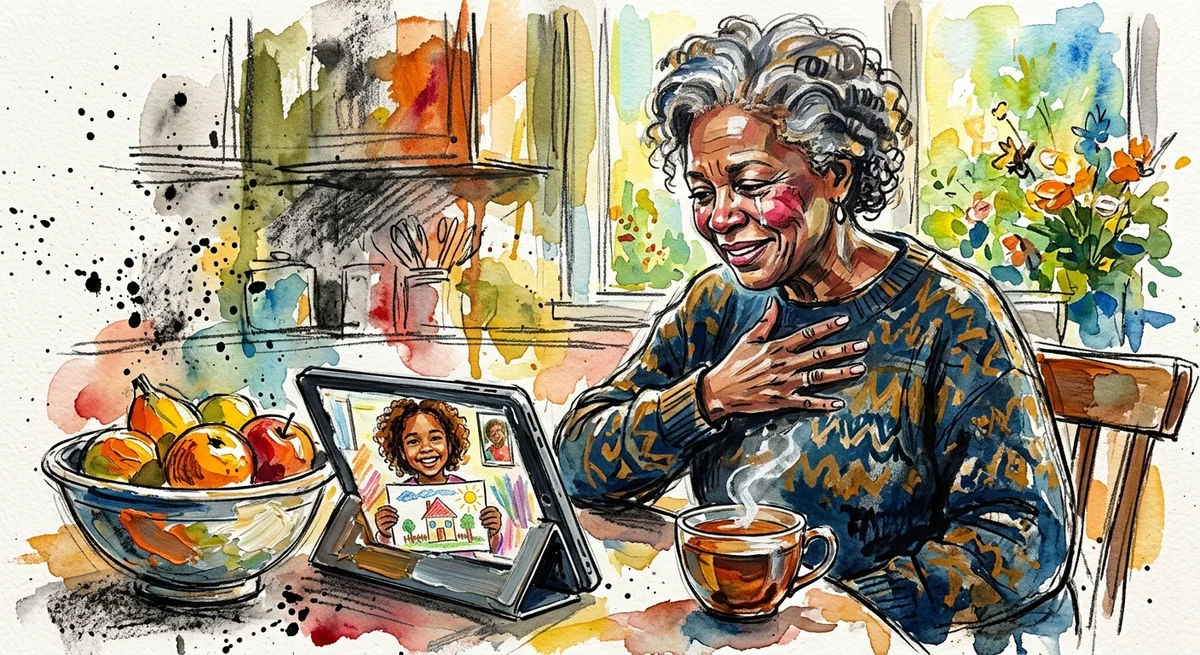
Why small daily moments beat the big monthly video call, and how to start a two minute thread today.
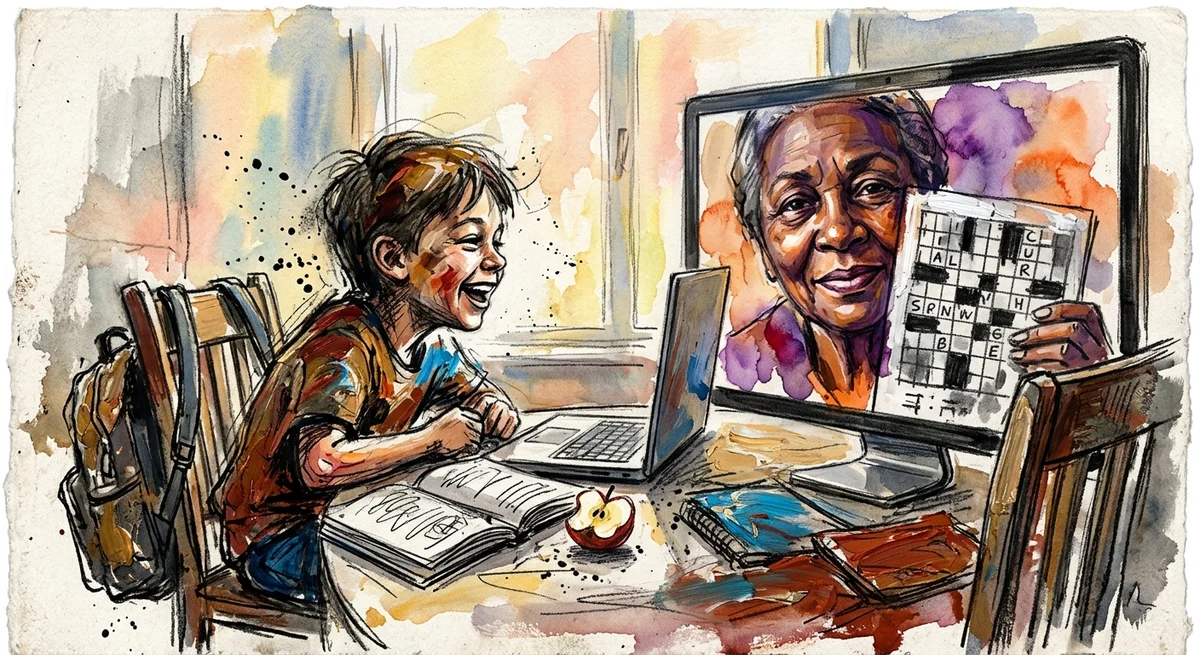
Why the fade happens on its own, and the small rituals that keep grandparents woven into the school year.