
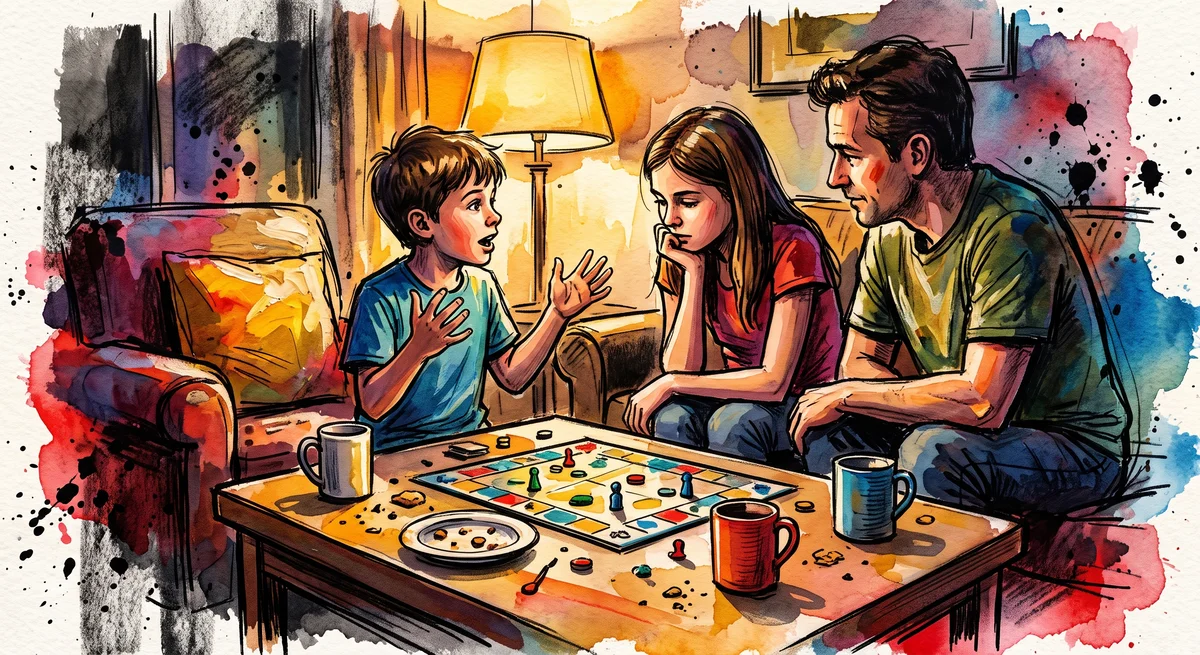
Take Winning Off the Table and Watch Your Kids Start Talking
Why the play that gets kids talking is the play where nobody is trying to beat anybody.
Read More
cooperative play
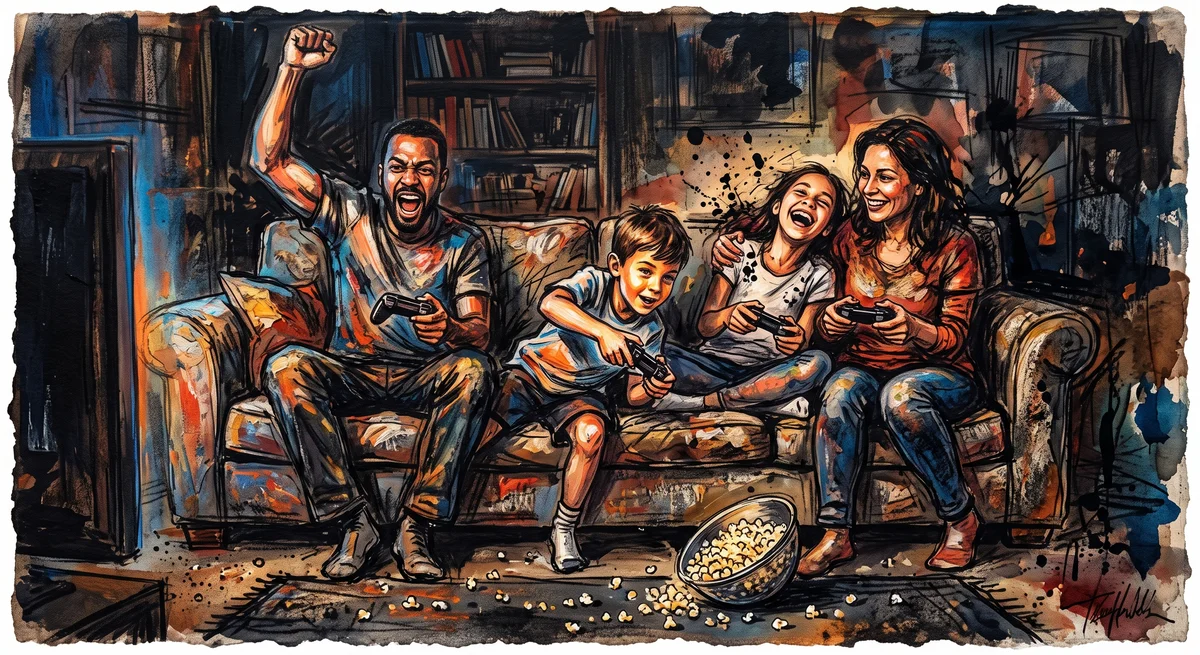
Co-op game sales are up 34 percent this year, and the reason is sitting on your couch. A six-year-old and a twelve-year-old can play the same game together, as long as you pick one with a low enough skill floor.
My seven-year-old lasted four minutes on the couch last Friday. He handed the controller back, said it was boring, and went off to find the dog. His sister is eleven and had already lapped him twice by then. Co-op game sales are up 34 percent this year, and I suspect a lot of us are buying for the same reason I was: we want Friday night to stop ending like that.
A six-year-old and a twelve-year-old do not have the same thumbs. One is still working out that the left stick moves you and the right stick looks around. The other stopped thinking about it years ago. Put them in the same race and the result is settled before the countdown finishes, and everyone on that couch can see it.
What a kid hears in that moment is not I lost. It is I am the worst one here. Kids quit things they are bad at in front of people they love, which is not a character flaw. Adults do the same thing, we just call it being busy.
A cooperative game rearranges who is losing to whom, because nobody is. When the family shares one outcome, the seven-year-old hauling ingredients across a cartoon kitchen is the reason dinner went out on time. He stays on the couch. He asks whether we can play again on Sunday.
The game itself is not doing much of the work here. Four people looking at the same screen, wanting the same thing for twenty minutes, is doing all of it.
Forty-title best-of lists are not much help when you are standing in a shop with ten minutes to spare. What helps is a short filter you can hold in your head.
The games that pass usually give each player a different job. Somebody chops, somebody carries plates, somebody is in charge of shouting about the fire. The jobs are not equally hard, and that is the point: your youngest gets the one he can do well, and it still counts toward the same score.
Two habits matter more than which title you land on. Let your youngest choose some weeks, even when he picks the easy one. And sit close, same couch, one controller passed along the row, because that part is most of what you came for. The photos and clips from those nights are worth keeping somewhere the whole family can add to, which is what KinClub Collections was built for.
That 34 percent is not really a story about games. It is a lot of parents wanting twenty minutes where everybody is on the same side. Buy the one your youngest can be good at, and you will get them.
Why the play that gets kids talking is the play where nobody is trying to beat anybody.
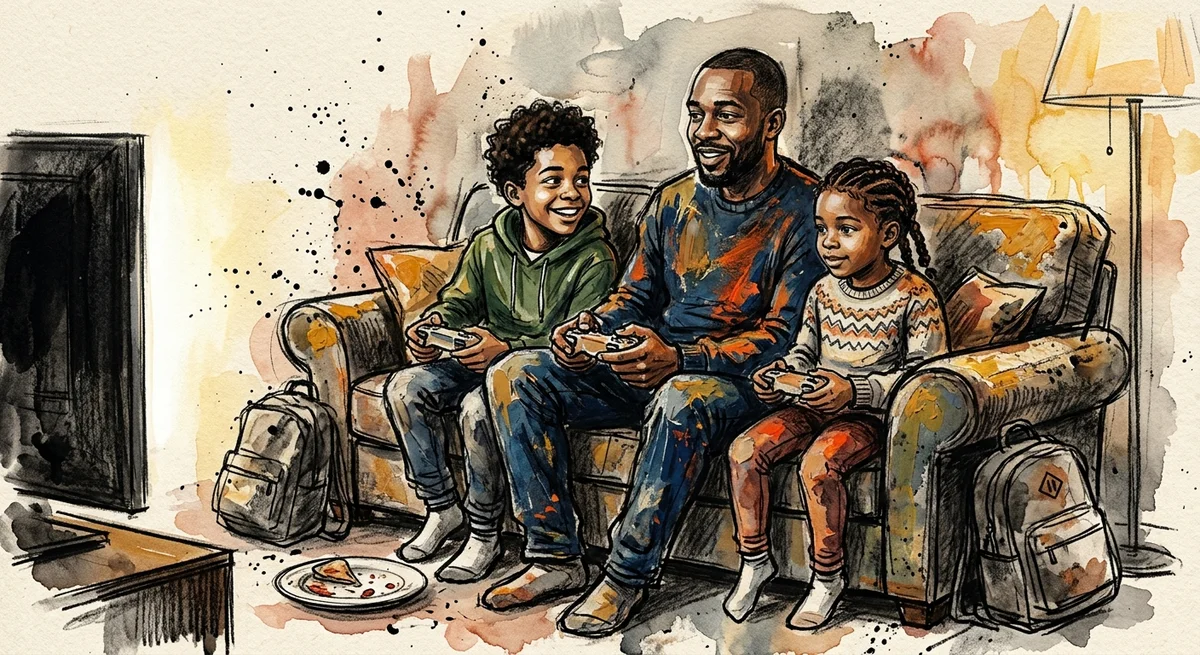
How to find games that fit into ten minutes on a school night, and why playing beats watching.
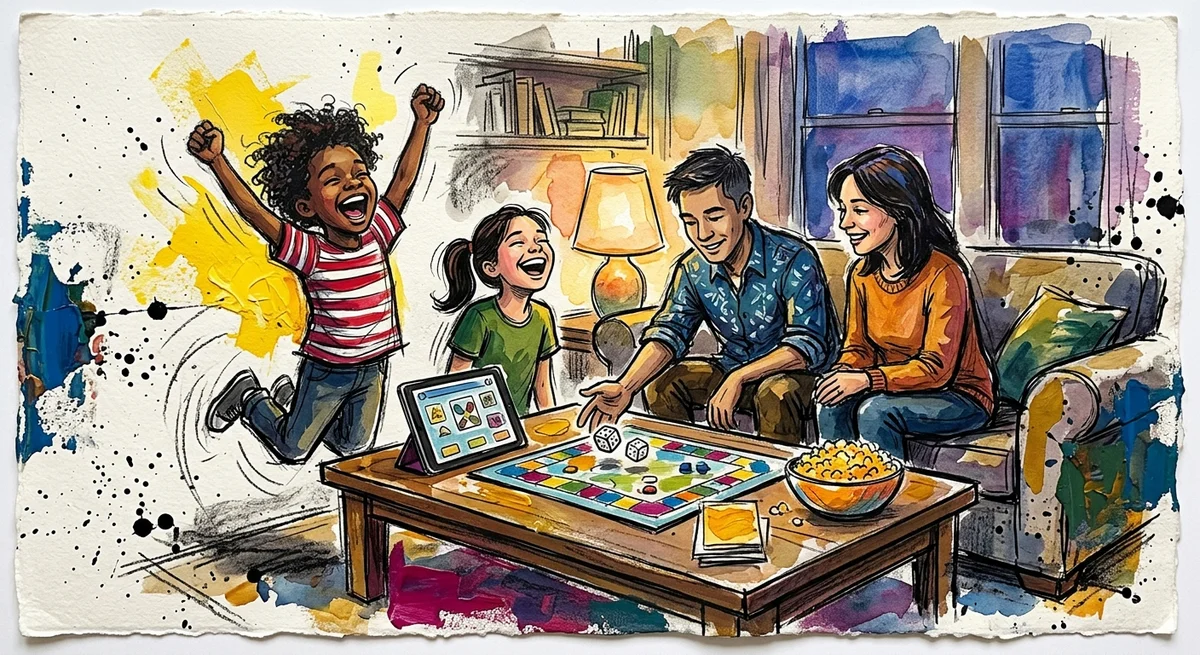
Blending analog and digital into one game night, without making anybody choose a side.