
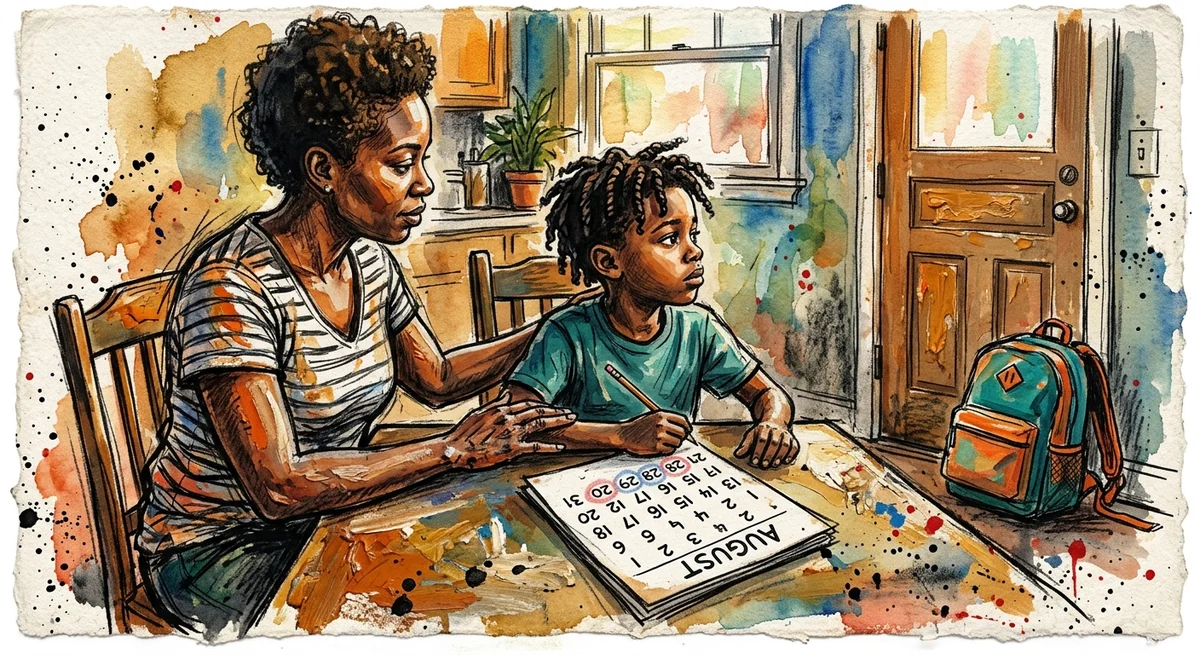
Summer Ending Anxiety Is Real: A Gentler Way Back to Routine
Why the last weeks of summer feel harder than the first, and how to ease back into routine gradually.
Read More
back to schoolanxiety
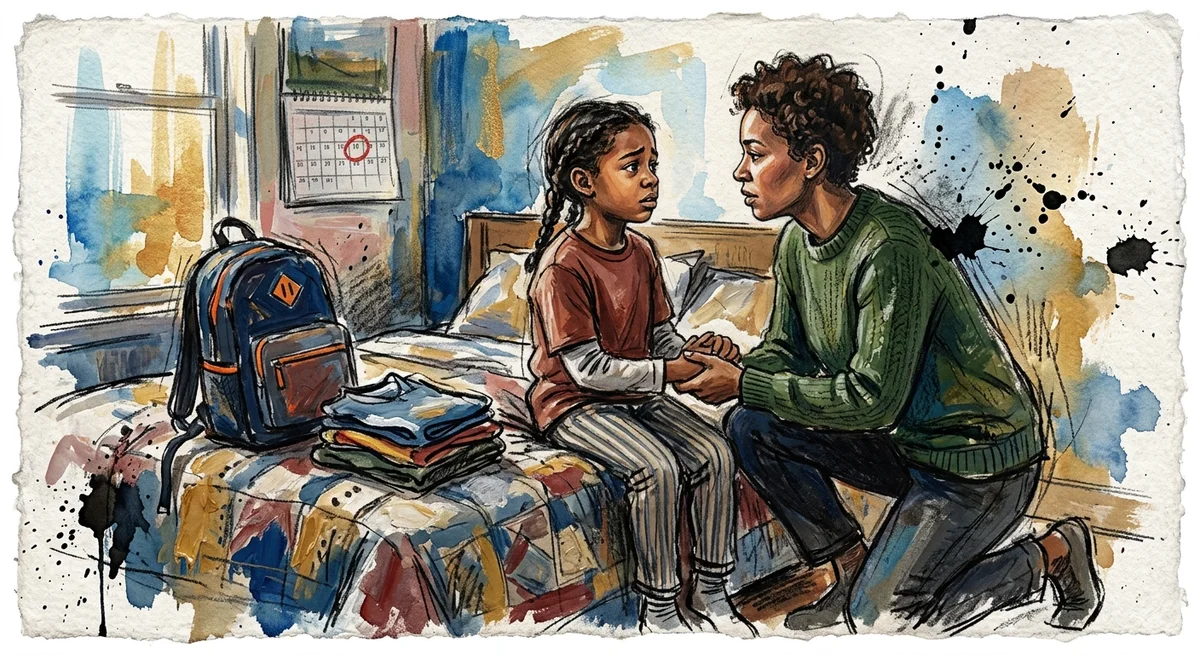
Back-to-school prep usually stops at supplies and schedules. Here is why the emotional side of the transition needs its own spot on the list, and how to get your kid ready for it before day one.
Every August the same scene plays out in our house. A countdown app on the fridge, a growing pile of folders and pencil cases on the kitchen table, and a kid who suddenly will not talk about school at all. We treat the supply list like the whole job. It is not. The bigger job, the one nobody writes down, is getting our kids ready to feel okay about a year that is about to change everything about their days.
Back-to-school season runs on logistics. New shoes. Updated immunization forms. A schedule that has to fit early drop-off, after-school pickup, and whatever practice starts the second week. Parents spend real hours on this, and for good reason. A missed form or a mixed-up pickup time turns the first week into chaos.
But underneath the logistics sits something quieter: pressure. Kids feel it even when they cannot name it. A new teacher they have to figure out. Friend groups that shifted over the summer. The jump to a harder grade, a new building, or a locker they have never used before. Parents carry their own version of it too, watching the calendar fill up and wondering if this is the year their kid struggles to keep up, socially or academically.
That pressure rarely shows up as a tantrum on August 1st. It shows up as a stomachache the week before school starts, sudden pickiness about what to wear, or a kid picking a fight over something small because the real thing underneath it is too hard to say out loud. When we only prepare the outside of the transition, the backpacks, the supplies, the bus schedule, we leave the inside of it to sort itself out on its own. It usually does not. Instead it leaks into the first weeks of school as meltdowns after pickup or a flat refusal to talk about how the day went.
Giving emotional readiness its own spot on the list, instead of treating it as an afterthought, changes that. It means asking your kid what they are looking forward to and what they are dreading before day one, not after a rough week has already happened.
A few ways to fold emotional prep into the same weeks you are already spending on supplies and schedules:
The supply list will get done. It always does. The more important job this month is making sure your kid does not walk into the first day carrying pressure they never had the chance to talk about.
Why the last weeks of summer feel harder than the first, and how to ease back into routine gradually.
Why kids push back on routines they used to accept, and how to rebuild before school starts.

Warm, practical strategies for building homework routines that stick once the school year starts.