
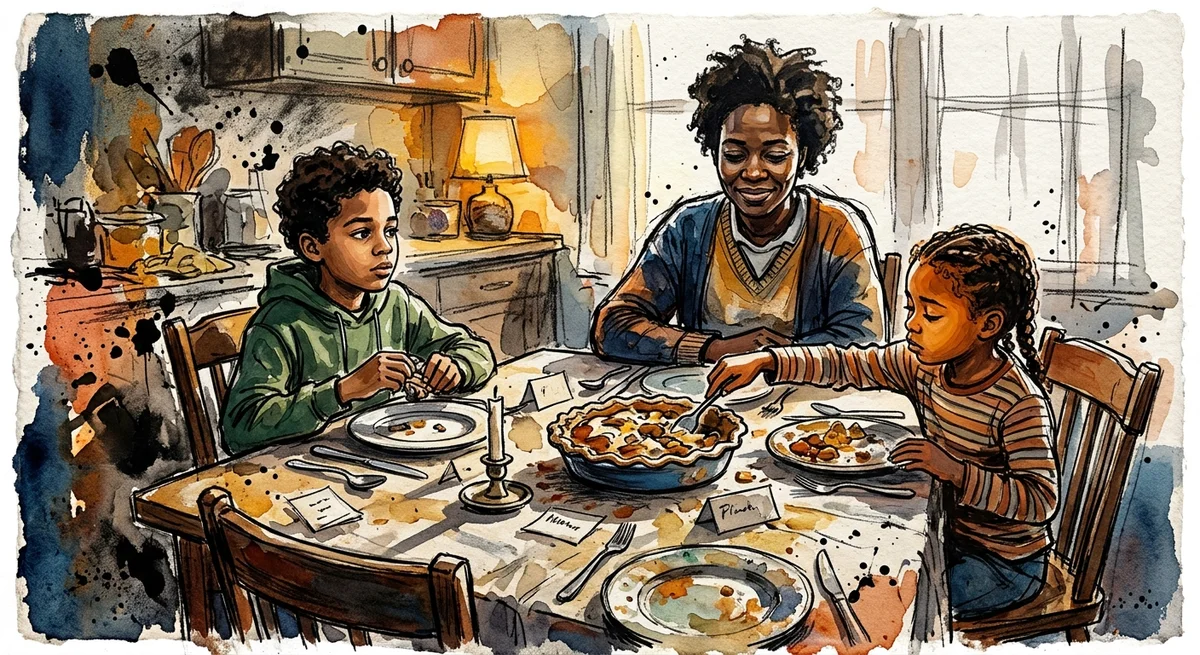
Your Kid Is Not Ungrateful. Gratitude Just Shows Up Late.
Why gratitude arrives later than we expect, and the shift that works better than another lecture at the table.
Read More
gratitude
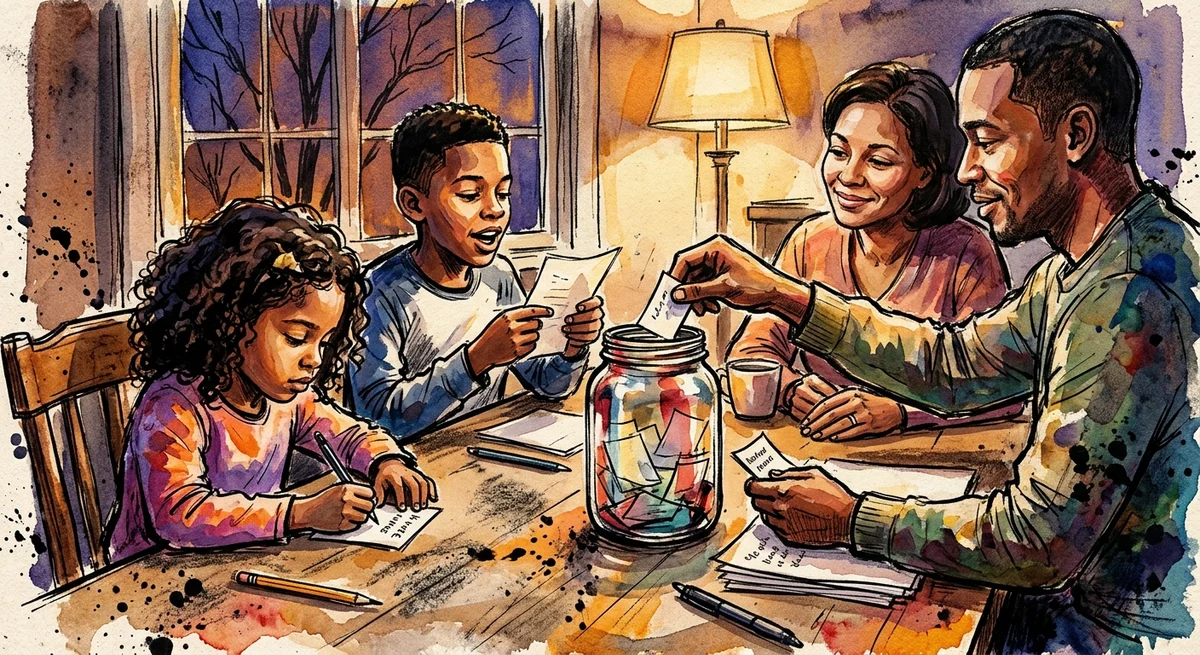
Saying thank you and feeling thankful develop on different timelines, and ages six to twelve is where the second one gets built. Here is how to practice gratitude as a shared activity instead of a dinner table lecture.
Your kid said thanks for the present in a voice flatter than the wrapping paper, and was already reaching for the next box. It stings a little more than it should. What you watched was not a character problem. It was a skill still being built, and November is a decent month to work on it.
We treat gratitude as politeness, which is why we keep trying to install it with reminders. But feeling thankful asks a child to do something harder than remembering a phrase. They have to notice they received something. They have to understand that a specific person decided to give it. And they have to work out that the giving cost that person something, whether that was money or an afternoon they could have spent another way.
That last piece is the slow one. Most kids under six manage the noticing. By seven or eight, plenty of them can tell you who gave it and why. Reasoning about what it cost someone keeps developing well past ten. So the nine-year-old who sounds hollow saying thank you usually is not faking anything. The feeling has not caught up to the vocabulary.
That changes what you do with it. Instead of auditing their tone at the table, you give them practice at spotting somebody else's intention. Prompting the phrase only trains the phrase.
Gratitude sticks better as an activity than a conversation. Kids this age learn through their hands, and a shared task takes the pressure off their face. Nobody is being watched for the correct expression because you are both busy.
The jar is the one I would start with, because a six-year-old and an eleven-year-old can both do it without help and it takes about ninety seconds. Our slips are mostly things like somebody carried my bag and dad fixed the bike light. Not profound. Still the right muscle.
One of these, done badly, several times, beats a new idea every week. Repetition is what makes gratitude feel ordinary instead of ceremonial, and ordinary is the goal.
A word on the version that backfires. If the activity turns into an evaluation, where you grade whether their answer counted as grateful enough, kids learn to produce the answer you want and stop looking. Take whatever they say. The noticing is the part that compounds.
You are not behind and neither is your kid. Pick the small thing you can do again next week while tired, keep doing it, and let the feeling show up on its own schedule.
Why gratitude arrives later than we expect, and the shift that works better than another lecture at the table.
The traditions kids actually carry are the small ones you can repeat while tired.
Why big family gatherings land so hard on kids, and the ten minutes of prep that helps.