
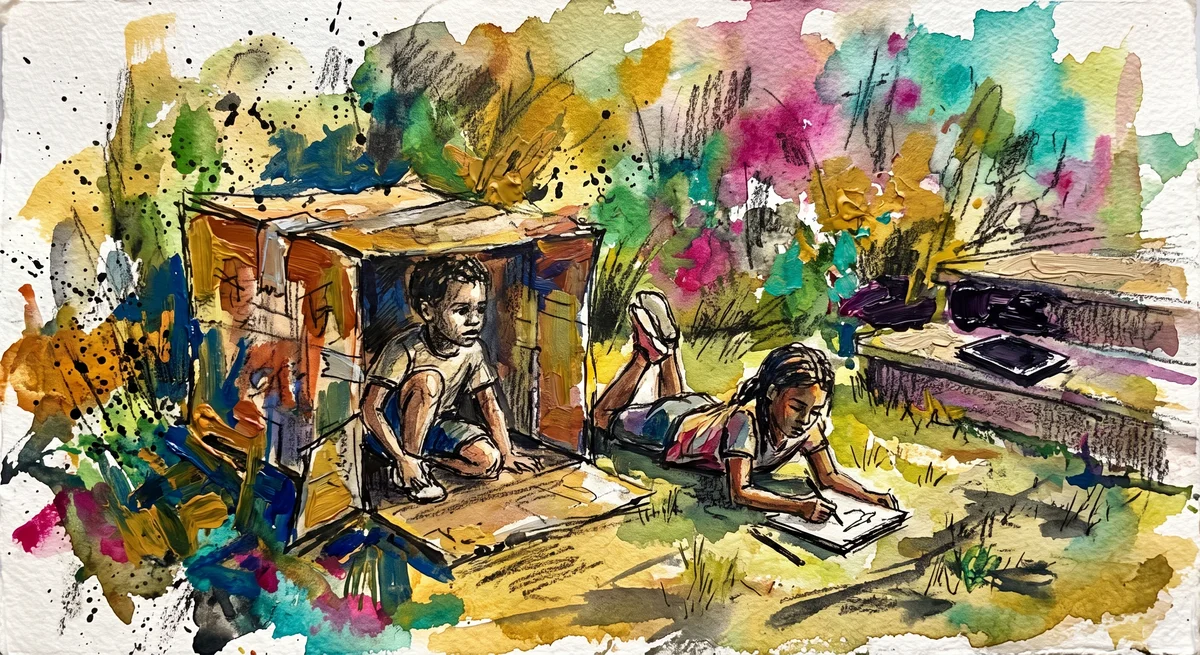
The No Phone Summer Is Not Really About Phones
Everyone is talking about banning devices for August, but the summer parents picture has little to do with the rules themselves.
Read More
screen timesummer
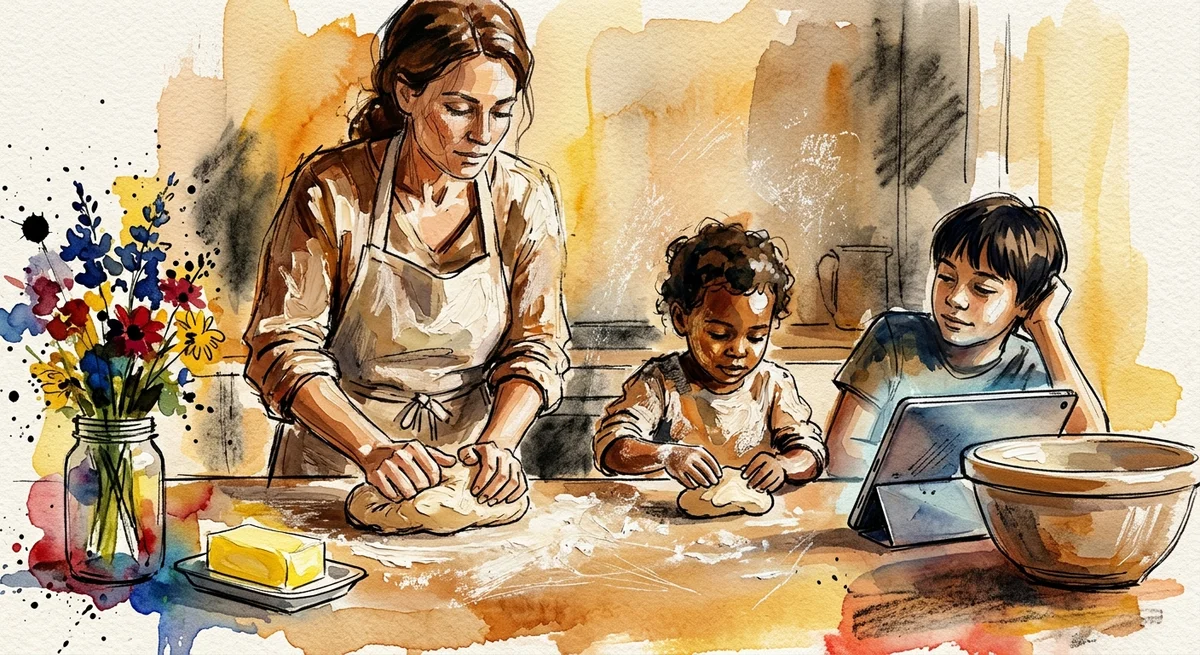
The viral butter mom aesthetic makes screen-free slow living look like the only good childhood. Here is why the middle ground between bans and unlimited scrolling is the one that actually works.
If your feed looks anything like mine, it is full of women in linen aprons churning butter at sunrise while their children read quietly beside a wood stove. The butter mom aesthetic took over this year, and somewhere between the sourdough and the wildflowers sits a quiet accusation: a truly present mother would have gotten rid of the screens by now. Meanwhile, in my actual kitchen, my daughter is watching her third video about axolotls while I unload the dishwasher. I know that twist of guilt well, and I want to talk you out of it. The answer to endless scrolling was never churning butter. It was never a total ban either.
I want to be fair to the trend, because underneath the linen there is something real. The butter moms are onto slowness. Kids do well with unhurried afternoons and with adults who are not glancing at a phone mid-sentence. That part is worth stealing.
What the aesthetic leaves out is everything off camera. Nobody films the butter mom answering work email, or her kid melting down over the wrong cup. And the whole thing is itself content, produced for the exact scrolling it claims to reject. When you compare your Tuesday to her highlight reel, you are comparing your real life to a set.
The trend also quietly revives an old idea: that screens and a warm childhood cannot coexist. Research keeps saying otherwise. The American Academy of Pediatrics dropped blanket hour limits years ago in favor of questions about content, context, and what screens might be crowding out. A kid watching a nature documentary next to a parent is not having a worse childhood than a kid shelling peas. What matters is whether your family feels connected, and that was never decided by butter.
Media use should be evaluated in the context of each child, the content they engage with, and what it may be crowding out, rather than by minutes alone.
Bans feel decisive, which is why they tempt us. Most of us have also run the experiment: the dramatic no-screens announcement, three tense days, then a quiet slide back to the old normal with a fresh layer of guilt on top. Unlimited scrolling fails differently but just as reliably. Balance is less dramatic than either, and it is the only approach I have seen hold up past a week.
Here is what balance looks like on an ordinary Tuesday:
And if the homemade part of the trend genuinely appeals to you, keep it, just without the pressure. KinClub Collections give the family shared folders for photos, kids' creations and saved moments, so the bread you actually baked together ends up somewhere your family sees it, instead of performing it for strangers.
If you want to go deeper on balanced screen habits, these are worth your time:
You do not need a wood stove to give your kids a slow, connected childhood, and you do not need to win a war against screens. You need a rhythm where screens have a place instead of taking every place. Pick your one anchor this week and put the rest of the guilt down.
Everyone is talking about banning devices for August, but the summer parents picture has little to do with the rules themselves.

The AAP has moved past rigid hour limits. Here is how the 5 Cs make screen decisions simpler and calmer for your family.

Screen time is now the most common family argument, but the fight is rarely about the device. Here is what to do instead of drawing another battle line.