
Raising Honest Kids: How to Talk to Children About Lying and Why Honesty Matters
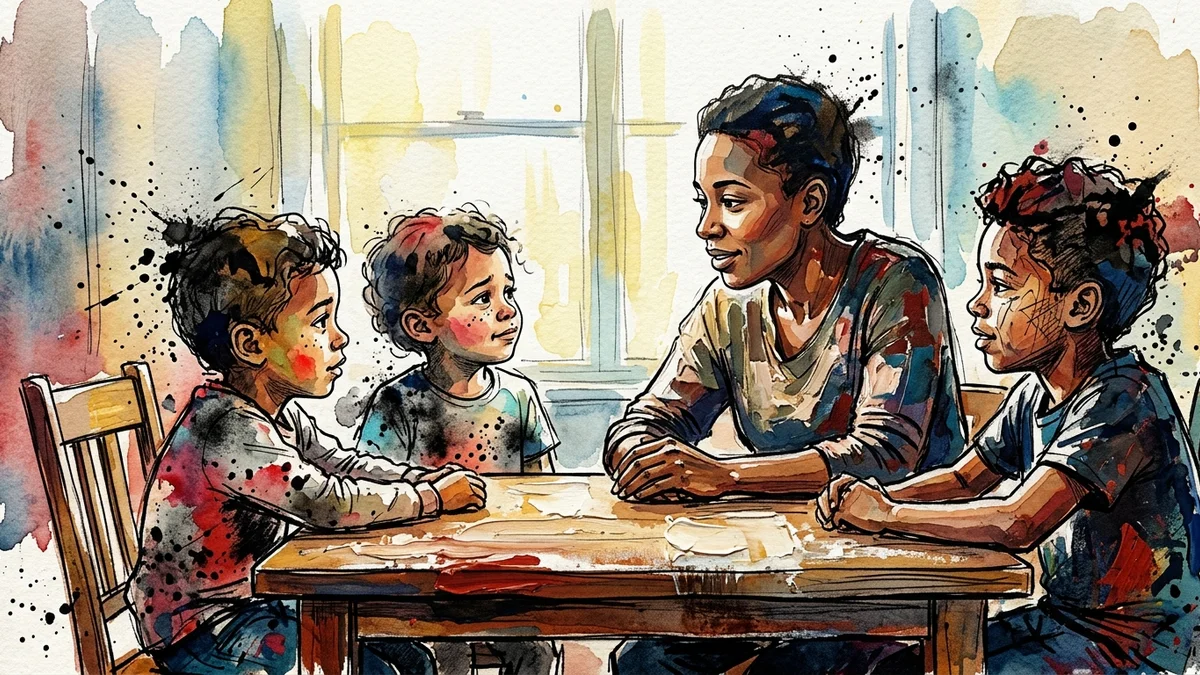
When kids lie, it can feel personal — but it is actually a normal part of development. Here is how to respond calmly, have meaningful conversations about honesty, and build a family culture where the truth feels safe.
Introduction
You catch your six-year-old telling you the dog knocked over the glass of juice — but you watched him do it yourself. Or your ten-year-old insists she handed in her homework when you both know she did not. Every parent knows the hollow feeling of being looked in the eye and told something that simply is not true.
Here is the reassuring part: children lie, and it does not mean you are raising a dishonest person. Lying is actually a sign of normal cognitive development — it requires theory of mind, impulse control, and the ability to imagine another person's perspective. The goal is not to raise a child who never tells an untruth, but to raise one who understands why honesty matters and feels safe enough to tell you the truth even when it is hard.
This guide will walk you through why children lie at different ages, how to respond in the moment without escalating, and how to build a family culture where honesty is genuinely valued — not just demanded.
Why Children Lie: What the Science Says
Understanding the motivation behind a lie is the first step toward addressing it well. Children do not lie for one single reason, and the motivations shift as they grow.
Ages 3–5: Fantasy and fear
Very young children blur the lines between imagination and reality constantly. A three-year-old who says a dragon stole her biscuit is not really lying — she is playing with the idea of story. At this age, what looks like lying is often magical thinking or wishful reality-shaping. When a four-year-old denies breaking something, it is almost always fear of consequences, not calculated deception.
Ages 6–9: Avoidance and social navigation
By middle childhood, children understand fully that saying something untrue is a deliberate choice. They lie primarily to avoid punishment, to get something they want, or to protect a friend. They are also beginning to use social lies — telling grandma they love her gift even if they do not. Developmentally, this is actually a form of empathy developing.
Ages 10–12: Privacy, identity, and peer pressure
Older children lie more strategically, often to carve out privacy as they begin moving toward adolescence. They may lie to protect a secret social life, to appear more capable or experienced than they are, or because they genuinely fear your reaction. At this age, the lies are less about the act and more about the relationship — they are testing whether you can handle the truth.
Children who lie are not bad kids. They are kids who have found that dishonesty works for them in some way. Our job is to make honesty work better.
The Three Things That Make Children Lie More
Before we talk about what to do when your child lies, it helps to understand what creates the conditions for lying in the first place.
1. Fear of disproportionate reactions
If children have learned — through experience — that telling the truth leads to explosive anger, harsh punishment, or prolonged lectures, they will choose the easier path: denial. The more frightening the anticipated reaction, the stronger the incentive to lie.
2. Perfectionism and unrealistic expectations
Children who feel they must always succeed, always behave, and always please their parents are under enormous pressure. Lying becomes a way of maintaining an impossible standard. If mistakes feel catastrophic, hiding them feels like self-preservation.
3. Lack of practice being honest
Honesty is a skill that needs to be practised and rewarded. If a child never receives warm acknowledgement for telling a hard truth, they have no real incentive to keep doing it.
How to Respond When Your Child Lies
The moment of discovery is where most of us stumble — and understandably so. It can feel like a betrayal. Here is a framework for responding in a way that opens doors rather than shutting them.
Step 1: Regulate yourself first
You cannot have a productive conversation about honesty when you are flooded with emotion. Take a breath. Your calm is the container the conversation needs. Children cannot hear your words when they are only experiencing your anger.
Step 2: Describe what you know, without accusation
Rather than opening with "You lied to me!", try describing the situation factually: "I saw the juice spill, and I heard you say the dog did it. I want to understand what happened." This keeps the door open rather than triggering a defensive response.
Step 3: Name the lie without shaming the child
There is an important distinction between "You are a liar" (identity attack) and "What you said was not true" (behaviour observation). Children who are shamed for lying do not become more honest — they become better at hiding.
Step 4: Express why honesty matters to you
Skip the lecture and try something personal instead: "When you tell me something that did not happen, it makes it really hard for me to trust what you say next time. That matters to me because I want to be able to trust you." This is far more powerful than a rule recitation.
Step 5: Give them a path forward
Always leave space for the truth to be told — even after the lie. "I am going to give you a minute, and then I want you to tell me what actually happened. When you do, I will stay calm." And then — crucially — you must stay calm when they do.
Age-by-Age Strategies for Building Honesty
A one-size-fits-all approach to honesty rarely works. Here is how to tailor your conversations by developmental stage.
For ages 3–5:
- Keep consequences small and predictable so the truth feels safer than the lie
- Praise honesty warmly and immediately: "Thank you for telling me the truth — that was really brave"
- Read stories together where honesty is rewarded (without it being preachy)
- Avoid asking questions you already know the answer to — it just sets up a lie. Instead, say what you saw: "I can see the blocks are knocked over"
For ages 6–9:
- Introduce the idea of a "truth bonus": if they come to you with a hard truth unprompted, the consequence is reduced — because the honesty counts for something
- Discuss real situations: "What would you do if your friend asked you to lie for them?"
- Explore what happens to trust over time: "If someone told you something untrue once, how would you feel the next time they told you something?"
- Model your own honesty openly — let them hear you admit you were wrong about something
For ages 10–12:
- Shift from rules to values: move away from "honesty is a rule" toward "honesty is part of who we are as a family"
- Create genuine privacy so they do not need to lie to have it — knock before entering, respect their space, ask before reading messages
- Ask rather than accuse: "I notice something seems off — is there anything you want to tell me?"
- Share your own stories of times you lied as a child and what you learned
- Praise truth-telling every time you see it, especially when it was hard for them
- Reduce the fear of consequences for honest mistakes — stay calm, stay curious
- Model your own honesty at home, including admitting when you are wrong
- Read books and watch shows together that explore honesty and its consequences
- Make it a family conversation, not a one-way lecture
Building a Family Culture of Honesty
Lasting honesty is not built in one conversation — it is built across hundreds of small moments. Here are some practices that help create a home where truth-telling is genuinely comfortable.
Hold regular family check-ins
A predictable, low-stakes space for everyone to share how their week has really gone normalises honesty as an everyday practice. When children are used to being heard without judgement in small moments, they are more likely to come to you in big ones.
Celebrate brave honesty
When a child admits to something difficult — a mistake, an accident, a worry — name it explicitly: "That took courage to tell me. I am really glad you did." Brave honesty should feel good, not just neutral.
Model imperfection openly
When you make a mistake — burn the dinner, forget a promise, lose your temper — say so out loud. "I got that wrong, and I am sorry." Children who see adults own their mistakes understand that honesty and imperfection can coexist.
Avoid setting honesty traps
If you already know the answer, do not ask the question in a way that invites a lie. Saying "Did you brush your teeth?" when you know the answer is no is a trap. "I need you to go brush your teeth now" is not.
Separate the act from the consequence
When a child comes to you with a hard truth, your first response should acknowledge the honesty before anything else. "I really appreciate you telling me that. Let us talk about what happened next." If they are braced for a big reaction and instead feel heard, they will come back.
A Note on Social and Protective Lies
Not all lies are created equal, and children are perceptive enough to notice when adults use them too. Telling grandma you love her jumper, saying you are fine when you are not — these social lubricants are part of human connection. Rather than pretending these do not exist, you can name them:
"Sometimes we say something kind even if it is not completely true — to protect someone's feelings. That is different from lying to avoid getting in trouble or to trick someone. Can you think of examples of each?"
This kind of nuanced, thoughtful conversation does far more to build genuine character than a blanket "lying is always wrong" rule — because children see the world clearly enough to know that is not quite true.